Discover the psychology behind effective mentorship. Learn how the science of coaching styles helps you match your learning needs with the right guidance framework.
In the realm of personal development, the phrase "coaching" has become ubiquitous. From executive leadership to habit formation, everyone seems to be looking for a guide. However, a critical paradox exists in the mentorship industry: while the demand for coaching is at an all-time high, the success rate of these interventions varies wildly. Why does one person thrive under a drill-sergeant approach while another shuts down completely? Why does a Socratic method inspire breakthrough thinking in one leader but frustrate another?
The answer lies in the science of coaching styles. Effective mentorship is not merely about the transfer of knowledge; it is a psychological dance between the mentor's framework and the mentee's cognitive and emotional needs. Research in organizational psychology and behavioral science suggests that the "fit" between a learner and a coaching style is the single most significant predictor of success.
This article explores the evidence-based frameworks behind effective coaching, dissecting why certain styles work, when to apply them, and how modern AI learning tools are democratizing access to high-level, personalized mentorship.
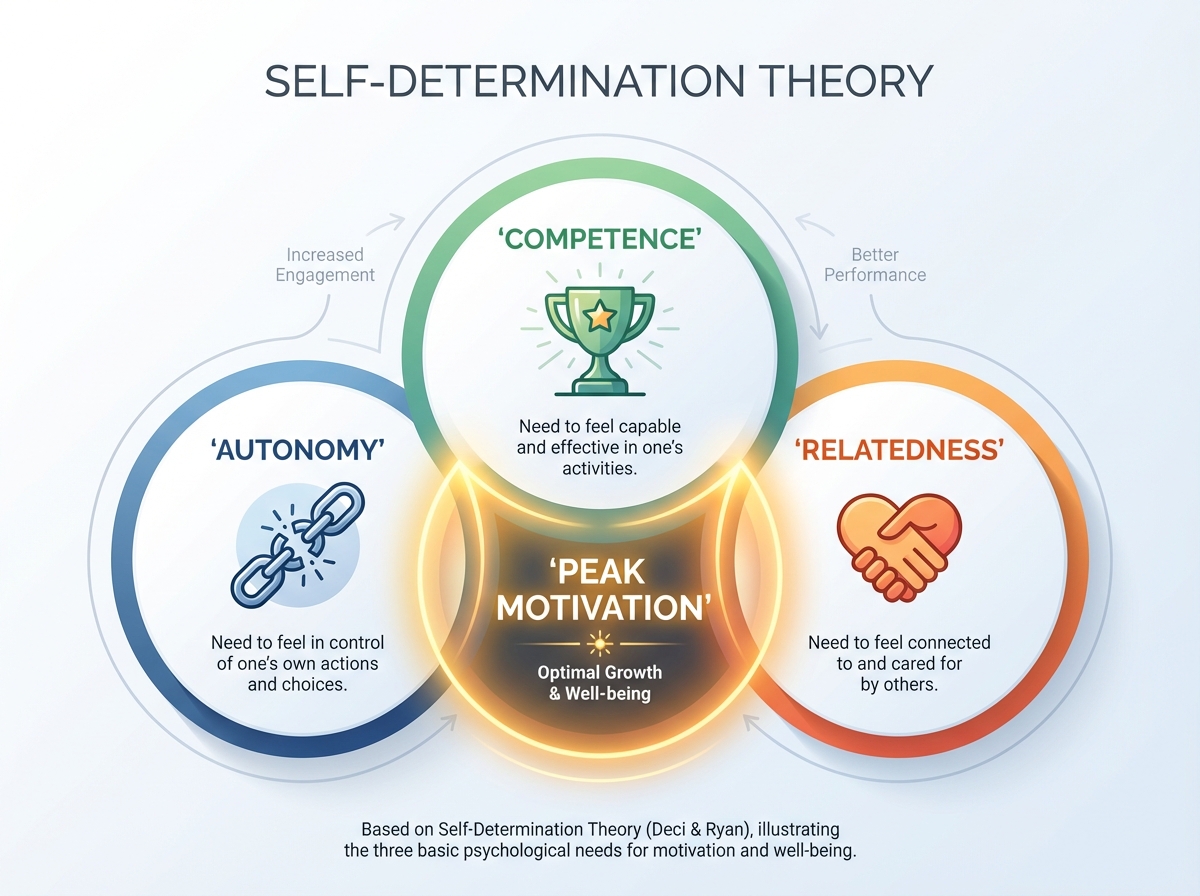
To understand coaching styles, we must first understand human motivation. The bedrock of modern coaching psychology is Self-Determination Theory (SDT). Developed by psychologists Edward Deci and Richard Ryan, SDT posits that for a person to be motivated and grow, three basic psychological needs must be met:
Different coaching styles pull different levers within this triad. A highly directive coach might boost competence by providing a clear roadmap but could threaten autonomy if they micromanage. Conversely, a supportive, non-directive coach might fulfill the need for relatedness and autonomy but leave a novice feeling lacking in competence due to a lack of structure.
The science of coaching styles is essentially the art of balancing these three needs based on the learner's current stage of development.
> 💡 Struggling to find the right balance? > > Identifying whether you need more structure (Competence) or more freedom (Autonomy) is the first step in effective growth. GPTnius AI Mentors are designed to adapt to your specific psychological needs. > > Meet the AI mentors built from this research →
While there are dozens of nuanced methodologies, academic research generally categorizes coaching styles into four primary archetypes. Understanding these will help you identify what you currently need to overcome your specific hurdles.
Focus: Transferring knowledge, setting specific goals, and providing feedback. Best for: Novices or individuals facing a crisis.
In this model, the mentor is the expert. The flow of information is largely one-way. This style is rooted in behavioral psychology—stimulus and response. If you are learning a completely new skill, such as financial modeling or a new programming language, you don't need open-ended questions; you need specific instructions. The Directive style reduces cognitive load, allowing the learner to focus on execution rather than strategy.
Focus: Active listening, questioning, and fostering self-discovery. Best for: Experts, creative problem solving, and high-performers.
Here, the coach acts as a mirror. This style draws heavily from humanistic psychology and Carl Rogers' client-centered therapy. The premise is that the mentee already possesses the answers but needs help unlocking them. By asking powerful questions (e.g., "What would happen if you tried X?"), the mentor forces the learner to engage in deep cognitive processing, leading to stronger neural pathways and better retention of solutions.
Focus: Changing values, beliefs, and identity. Best for: Career pivots, leadership development, and breaking bad habits.
Transformational coaching goes beyond skills; it targets the "self." It aligns with the concept of neuroplasticity—rewiring how we see ourselves. A transformational mentor challenges your limiting beliefs. If you believe "I am not a disciplined person," a transformational coach doesn't just give you a calendar; they work to alter your self-perception until you believe "I am the kind of person who shows up every day."
Focus: Performance, rewards, and consequences. Best for: Short-term goals and hitting specific metrics.
This is a results-oriented approach. It is less concerned with how you feel and more concerned with what you did. It utilizes extrinsic motivation. While less effective for deep, long-term change, it is incredibly effective for "sprints" or overcoming procrastination in the short term.
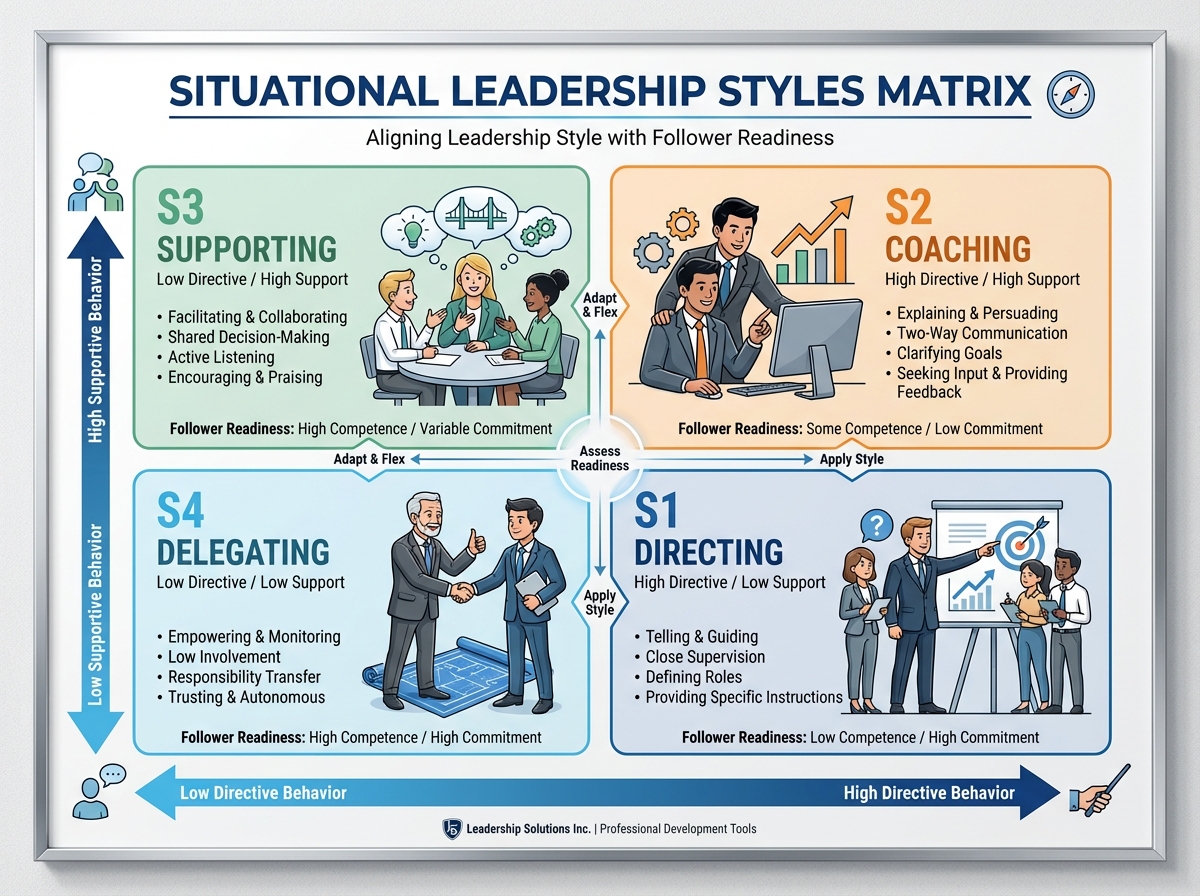
One of the most robust frameworks in management science is the Situational Leadership Theory, developed by Paul Hersey and Ken Blanchard. It argues that there is no single "best" style of leadership or coaching. Instead, the effective leader adapts their style based on the maturity (competence + commitment) of the follower.
The error most people make in personal development is sticking to one style regardless of the context. You might need a "Drill Sergeant" for your fitness goals (Directive) but a "Philosopher" for your career strategy (Non-Directive).
Why do we sometimes reject good advice? The science points to cognitive biases.
Understanding these biases allows us to select mentorship that navigates around our psychological defenses. This is where AI learning creates a fascinating shift in the landscape. An AI mentor is perceived as non-judgmental. Research indicates that people are often more honest with digital interfaces than human therapists because the fear of social judgment is removed. This lowers the barrier to "Reactance," allowing for more effective coaching conversations.
Applying the science of coaching styles requires access to a diverse range of methodologies and the wisdom to know which one to apply. This is where GPTnius bridges the gap between theory and practice.
GPTnius offers AI Mentors trained on proprietary research analyzing the published works, philosophies, and proven methodologies of thought leaders, including leading researchers on coaching and motivation psychology. Our mentors do not impersonate anyone. They synthesize researched frameworks, such as self-determination theory and situational coaching styles, into personalized coaching conversations built around your specific goals.
GPTnius allows you to access the "brains" of various coaching archetypes without the logistical nightmare of hiring five different human coaches. You can apply proven principles and frameworks to your own challenges through guided, personalized discussions.
> 💡 Ready to build your personal board of mentors? > > Stop guessing which coaching style you need. Access AI Mentors trained on the research of history's greatest strategists and adapt your growth plan today. > > Meet the AI mentors built from this research →
The science of coaching styles reveals that personal growth is not a linear path, nor is it a solitary one. It requires the right inputs at the right time. Whether you require the firm hand of a directive teacher or the open ear of a transformative visionary, understanding the psychology behind these interactions is key to unlocking your potential.
By leveraging the adaptive capabilities of AI and the structured frameworks of proven methodologies, you can move beyond generic advice. You can curate a learning environment that respects your psychological needs (Autonomy, Competence, Relatedness) while challenging you to expand your horizons. The future of mentorship is precise, personalized, and accessible—it is up to you to take the first step.
There is no single 'best' style. Research, specifically Situational Leadership Theory, suggests the most effective style depends on the learner's competence and commitment levels regarding a specific task. A mix of directive and supportive behaviors is usually required.
AI mentorship offers distinct advantages in availability, cost-effectiveness, and lack of judgment, which can encourage greater honesty. While it may lack the emotional intuition of a human, AI mentors trained on proven frameworks provide consistent, high-quality strategic advice and accountability.
Absolutely. In fact, it is recommended. You might need a directive style for learning a technical skill (like coding) but a non-directive, transformational style for leadership development or emotional intelligence.