Transform your growth by applying the scientific method to your life. Learn how The Scientist Coach approach uses data to eliminate bias and accelerate results.
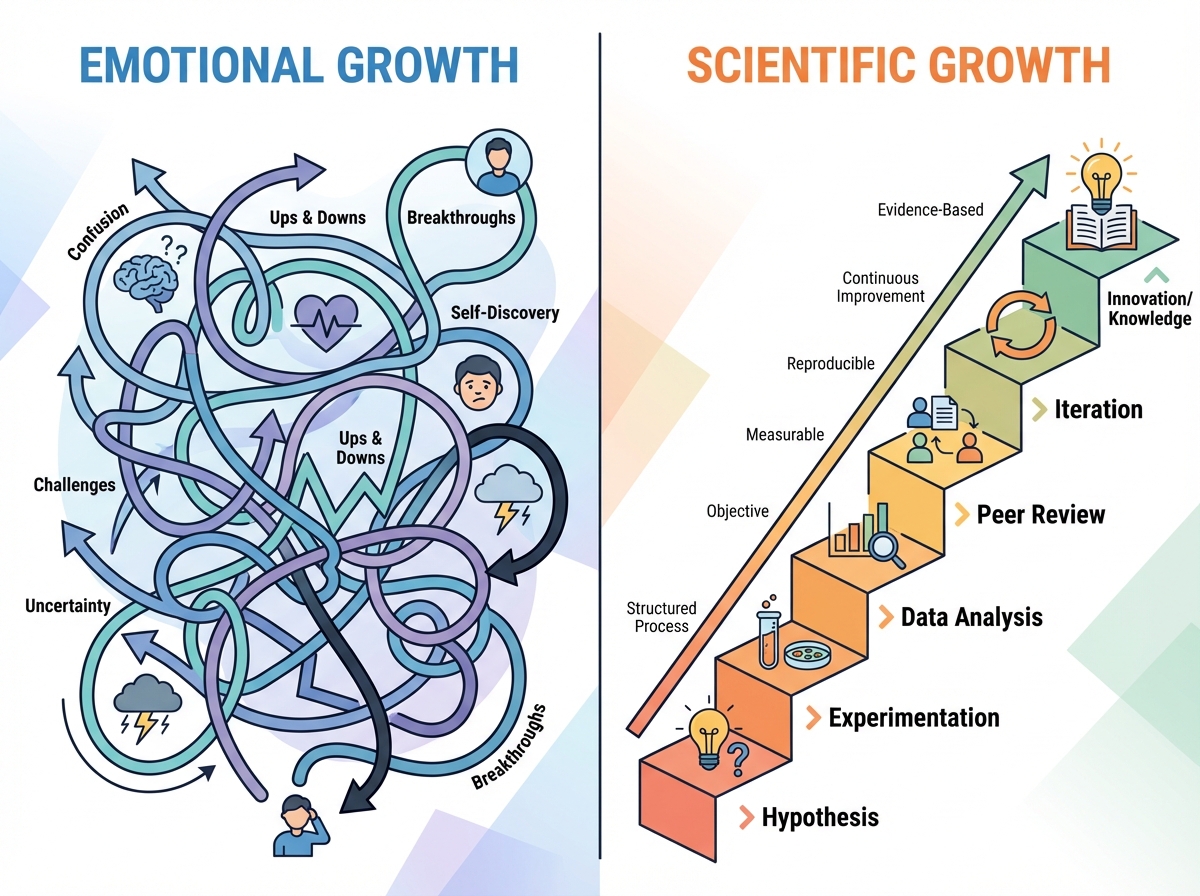
We often treat personal development as a matter of character. If we fail to stick to a diet, we lack discipline. If we miss a deadline, we lack focus. We view our struggles through a lens of morality and emotion. But what if the problem isn't your willpower, but your variables?
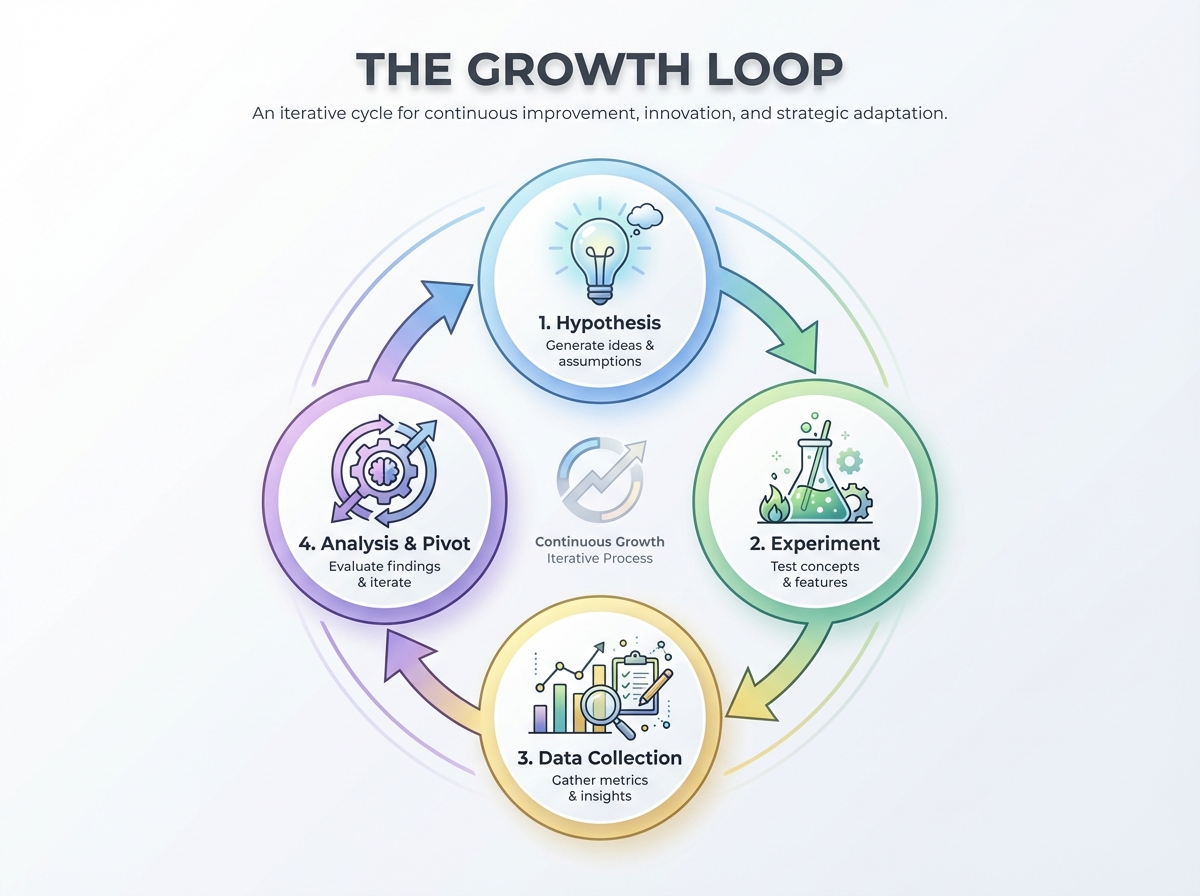
Imagine a chemist whose experiment fails. They don’t blame the chemicals for being "lazy." They analyze the temperature, the mixture ratios, and the timing. They adjust the variables and try again. This is the essence of The Scientist Coach methodology: removing the emotional judgment from failure and replacing it with data-driven iteration.
In the era of AI and advanced analytics, we have access to more data about our lives than ever before. Yet, few of us use this data to make decisions. We rely on "gut feelings" that are often riddled with cognitive biases. By adopting the mindset of a scientist, you transform your life from a series of struggles into a laboratory of continuous improvement.
To adopt the Scientist persona, you must shift from hoping for change to engineering it. This requires a fundamental change in how you view your daily actions. You are no longer just living your life; you are observing it.
Traditional goal setting often looks like this: "I want to be more productive." This is a wish, not a plan. It is subjective and impossible to measure accurately.
A Scientist approaches this differently. They form a hypothesis based on research or observation. For example:
This is testable. It has a clear input (lunch type) and a clear output (energy duration).
In a lab, you cannot change five things at once and know which one worked. In personal development, we often try to "fix our lives" by starting a diet, a gym routine, and a reading habit on the same Monday. When we inevitably crash, we don't know which change caused the burnout.
The Scientist Coach approach advocates for single-variable testing. You change one specific behavior while keeping the rest of your routine constant. This allows you to isolate the effects of that specific change.
> 💡 Stop Guessing, Start Testing > > You don't have to analyze your life's variables alone. GPTnius AI Mentors, trained on proprietary research into analytical frameworks and habit formation, can help you design the perfect experiment for your goals. > > Meet the AI mentors built from this research →
Why is data so critical? Because the human brain is an unreliable narrator. We are wired to protect our egos, which makes objective self-analysis nearly impossible without external tools.
We tend to notice data that supports what we already believe. If you believe you are "not a morning person," you will vividly remember the one morning you felt terrible at 6:00 AM, while forgetting the three mornings you felt fine. A data log does not forget. It shows the trendlines that your memory erases.
We often stick to routines that aren't working simply because we've been doing them for a long time. "I've been using this organization system for three years; I can't switch now." The Scientist looks at the efficiency metrics. If the system is yielding poor results, the tenure of the system is irrelevant. It is discarded or iterated upon immediately.
The engine of the Scientist Coach method is the feedback loop. This is where most people stop—they set the goal, but they never review the data.
Data comes in two forms:
To be effective, measurement must be frictionless. If it takes too much effort to track, the data set will be incomplete.
This is where you look for correlations. Does your productivity dip every time your sleep drops below 6.5 hours? Does your anxiety spike on days you skip breakfast?
Analysis requires detachment. You are looking for the "root cause," not a reason to beat yourself up. If the data shows you spend 3 hours a day on social media, the Scientist doesn't say, "I'm lazy." The Scientist asks, "What triggers this behavior, and what mechanism can block it?"
Based on the analysis, you adjust the hypothesis.
Historically, maintaining this level of rigorous analysis was difficult. It required spreadsheets, journals, and immense discipline. Today, AI serves as the ultimate laboratory partner.
AI excels at pattern recognition. It can ingest the messy data of your life—your journal entries, your task logs, your calendar—and spot connections that you would miss. It acts as an objective third party, unswayed by your emotions or excuses.
Applying the scientific method to your own life can be daunting. It is difficult to be both the subject of the experiment and the objective researcher. This is where GPTnius bridges the gap.
GPTnius offers AI Mentors that have been trained on proprietary research analyzing the published works, philosophies, and proven methodologies of thought leaders in data science, psychology, and behavioral economics. specifically, the "The Scientist" mentor profile is designed to help you:
By engaging in regular "lab reviews" with your AI Mentor, you turn personal growth into a reliable system rather than a guessing game.
> 💡 Ready to Analyze Your Life's Data? > > Stop relying on willpower and start relying on evidence. Let the GPTnius "Scientist" mentor help you design your next growth experiment today. > > Meet the AI mentors built from this research →
The shift from "self-help" to "data-driven development" is a profound one. It liberates you from the cycle of guilt and motivation. When you adopt the identity of the Scientist, failure ceases to exist. There is only data. There are only results that inform the next experiment.
By defining your metrics, controlling your variables, and utilizing AI to analyze the outcomes, you can optimize your habits, career, and mindset with mathematical precision. The laboratory is open—what will you test first?
The Scientist Coach approach is a personal development method that treats habits and goals as scientific experiments. It involves forming hypotheses, testing variables, collecting data, and analyzing results to make objective improvements.
AI acts as an objective analyst. It can process data from your habits and journals to identify patterns, correlations, and biases that a human might miss, offering evidence-based suggestions for improvement.
No. While the concept is based on data, the application is simple. It focuses on tracking basic metrics (like time, mood, or completion rates) and using tools like GPTnius to help interpret that information through natural conversation.