Discover how building accountability with an AI mentor can bridge the gap between intention and action using 24/7 availability and psychological safety.
We all have a version of ourselves we aspire to be. This future self exercises daily, writes that novel, masters a new coding language, and leads with empathy. Yet, there is a vast chasm between who we want to be and who we are today. This is known as the "intention-action gap."
For decades, the standard solution to bridging this gap has been human accountability: hiring a coach, finding a mentor, or asking a friend to check in on us. While effective, these methods have limitations. Humans are busy, their memories are fallible, and—perhaps most significantly—we often hide our failures from them to avoid judgment.
Enter the era of building accountability with an AI mentor. By leveraging artificial intelligence, we can create a support system that is always available, endlessly patient, and data-driven. This article explores the psychology behind accountability, why AI is uniquely positioned to solve the consistency problem, and how you can utilize platforms like GPTnius to turn your goals into inevitable outcomes.
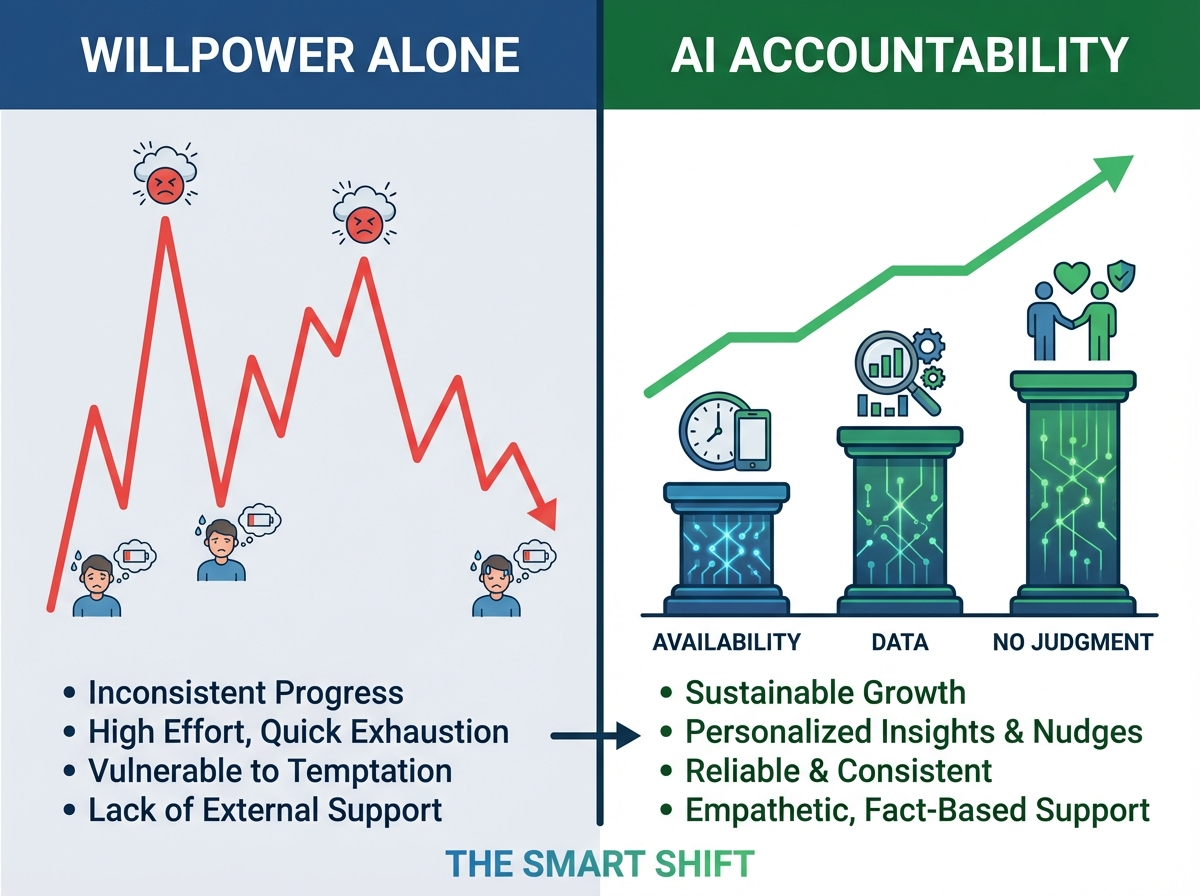
To understand why AI mentorship works, we first need to understand why willpower alone is rarely enough. Behavioral psychology tells us that human motivation is fickle. It spikes when we set a goal (New Year's Day) and plummets when the novelty wears off (mid-February).
One of the primary mechanisms of accountability is the Hawthorne Effect—the phenomenon where individuals modify an aspect of their behavior in response to their awareness of being observed. Simply knowing that someone (or something) is tracking your progress increases your likelihood of sticking to the plan.
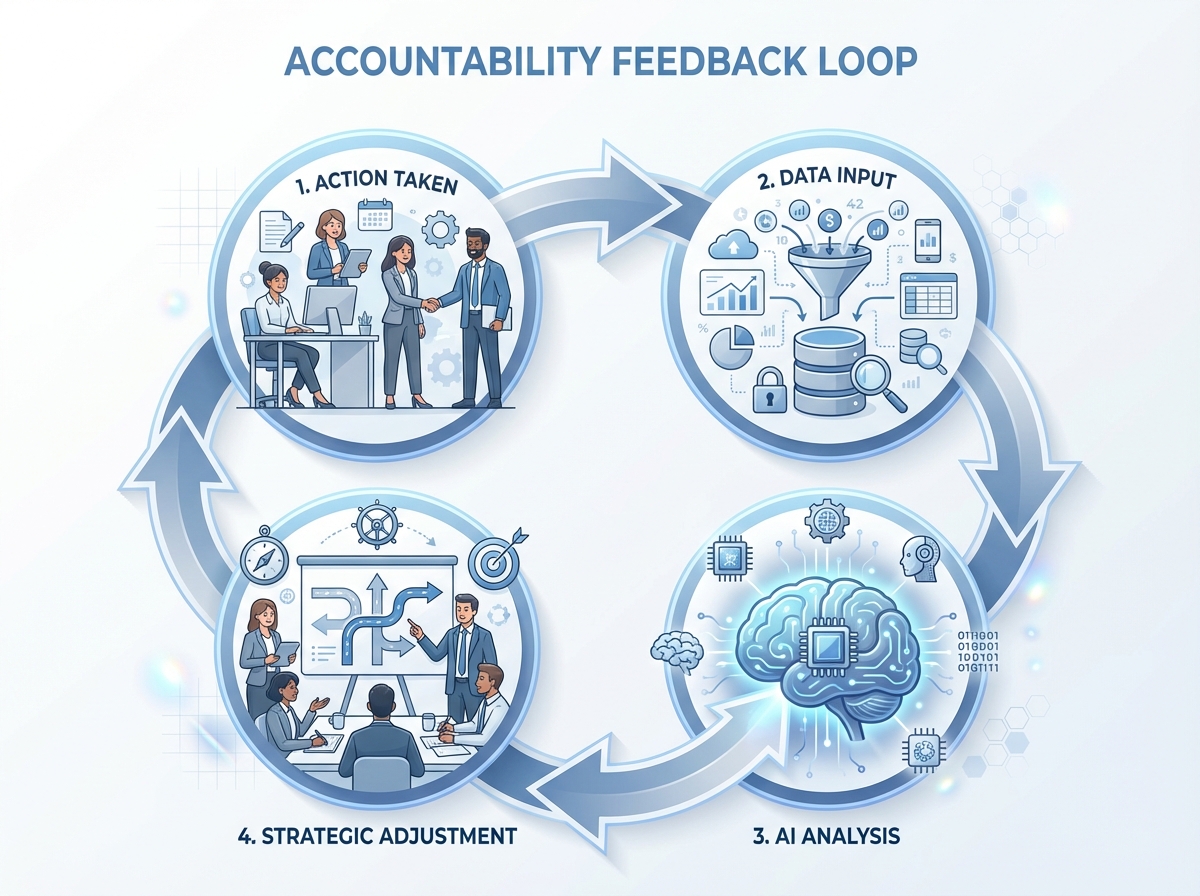
Accountability provides a necessary feedback loop. Without it, we are poor judges of our own progress. We tend to overestimate our efforts and underestimate our distractions. An external observer provides objective reality testing, forcing us to confront the data of our actions rather than the narrative of our intentions.
> 💡 Stop Relying on Willpower Alone > > Your brain is wired to seek comfort, but an AI Mentor is programmed to keep you consistent. GPTnius utilizes research-backed frameworks to turn the Hawthorne Effect into a daily advantage. > > Meet the AI mentors built from this research →
While human mentors provide invaluable emotional nuance and networking opportunities, AI mentors excel in the trenches of daily habit formation. Here is why building accountability with an AI mentor is becoming the preferred method for high performers.
Inspiration often strikes at 11 PM, and crises of confidence often happen at 6 AM. A human coach is likely sleeping; an AI mentor is ready to engage. This immediacy is crucial for "intervening" in the moment of weakness. When you feel the urge to procrastinate, an AI mentor can talk you through the resistance immediately, rather than waiting for a scheduled weekly call.
Shame is the enemy of growth. When we fail to meet a goal, we often avoid our human accountability partners because we feel embarrassed. This avoidance leads to a total breakdown of the system.
AI mentors offer total psychological safety. You can confess, "I wasted three hours scrolling social media today," without fear of disappointment or judgment. The AI simply processes this as data and helps you strategize for the next hour. This encourages radical honesty, which is the foundation of improvement.
Humans forget details. An AI mentor remembers every goal you set three months ago, every obstacle you faced last week, and every strategy that failed yesterday. It can synthesize this history to identify patterns you might miss. For example, it might point out, "You tend to miss your writing goals every Tuesday; let's look at your Tuesday schedule."
To get the most out of an AI mentor, you shouldn't just treat it like a diary. You should use it to implement proven behavioral frameworks. Here are three powerful methodologies you can execute with an AI.
Based on research by Gabriele Oettingen, WOOP is a strategy to turn vague wishes into realistic plans.
An AI mentor can guide you through this process iteratively. Instead of just saying "I want to run," the AI will ask, "What is the specific internal obstacle that usually stops you?" It forces you to pre-plan your response to failure.
Drawing from the philosophy that behaviors follow identity, you can use an AI mentor to reinforce who you are becoming. Instead of tracking results (e.g., "I lost 1 pound"), use the AI to track votes for your new identity (e.g., "I acted like an athlete today").
Your check-in with the AI might look like this:
Before starting a project, ask your AI mentor to conduct a "Pre-Mortem." Ask: "Imagine it is six months from now and I have failed at this goal. Based on what you know about my habits, why did I fail?"
The AI can analyze your past conversations to predict your pitfalls (e.g., "You likely failed because you didn't account for your travel schedule in November"). This allows you to solve problems before they happen.
Ready to start building accountability with an AI mentor? Follow this workflow for maximum effectiveness.
Spend your first session defining the "North Star." Be specific. Do not say "I want to be more productive." Say, "I want to increase my deep work hours to 4 per day by utilizing time-blocking."
Decide on a check-in rhythm. For habit formation, daily is best. For strategic goals, weekly may suffice.
Once a month, ask the AI to summarize your progress. Ask for a "trend analysis." This turns your daily chats into a strategic report on your life.
While generic chatbots can simulate conversation, GPTnius offers a specialized experience designed specifically for growth and mentorship.
GPTnius offers AI Mentors trained on proprietary research analyzing the published works, philosophies, and proven methodologies of thought leaders, including leading researchers on habit formation and accountability. Our mentors do not impersonate anyone. They synthesize researched frameworks, such as habit systems and mental models, into personalized coaching conversations built around your specific goals.
Here is how GPTnius bridges the gap:
> 💡 Turn Research into Results > > Don't just read about mental models and habit systems—apply them directly to your life with an AI Mentor trained on the research behind them. Experience the power of specialized AI Mentors today. > > Meet the AI mentors built from this research →
AI mentors are not designed to replace the emotional connection of a human, but they are often superior for daily consistency, data tracking, and immediate availability. They work best when used to manage daily habits and workflows, while humans are great for long-term career strategy and emotional support.
Privacy is paramount. When choosing a platform like GPTnius, ensure you review their privacy policy. Generally, AI mentorship platforms are designed to process your inputs to provide guidance without sharing your personal struggles publicly.
Start small. Define one specific goal (e.g., 'Write 500 words daily') and set up a daily check-in routine. Be honest with the AI about your obstacles so it can provide relevant, research-backed advice.