Unlock your potential with this comprehensive guide to shadow work. Discover practical shadow work exercises, journaling prompts, and steps to integrate your unconscious mind.
"Until you make the unconscious conscious, it will direct your life and you will call it fate."
This famous sentiment, often attributed to Swiss psychiatrist Carl Jung, encapsulates the core mission of shadow work. We often move through life believing we are fully in control of our actions, thoughts, and relationships. Yet, we find ourselves repeating the same toxic patterns, exploding in anger over minor inconveniences, or feeling an inexplicable dislike toward people we barely know.
These are not random occurrences. They are messages from the Shadow.
In the realm of personal development, few concepts are as transformative—or as misunderstood—as shadow work. It is not about eradicating your flaws or dwelling on negativity. Rather, it is a process of integration. It is the practice of bringing the hidden parts of yourself into the light so that you can become a whole, undivided human being.
This comprehensive shadow work guide will demystify the psychological theory, provide you with a structured approach to uncovering your hidden self, and offer actionable shadow work exercises and prompts to start your journey toward integration today.
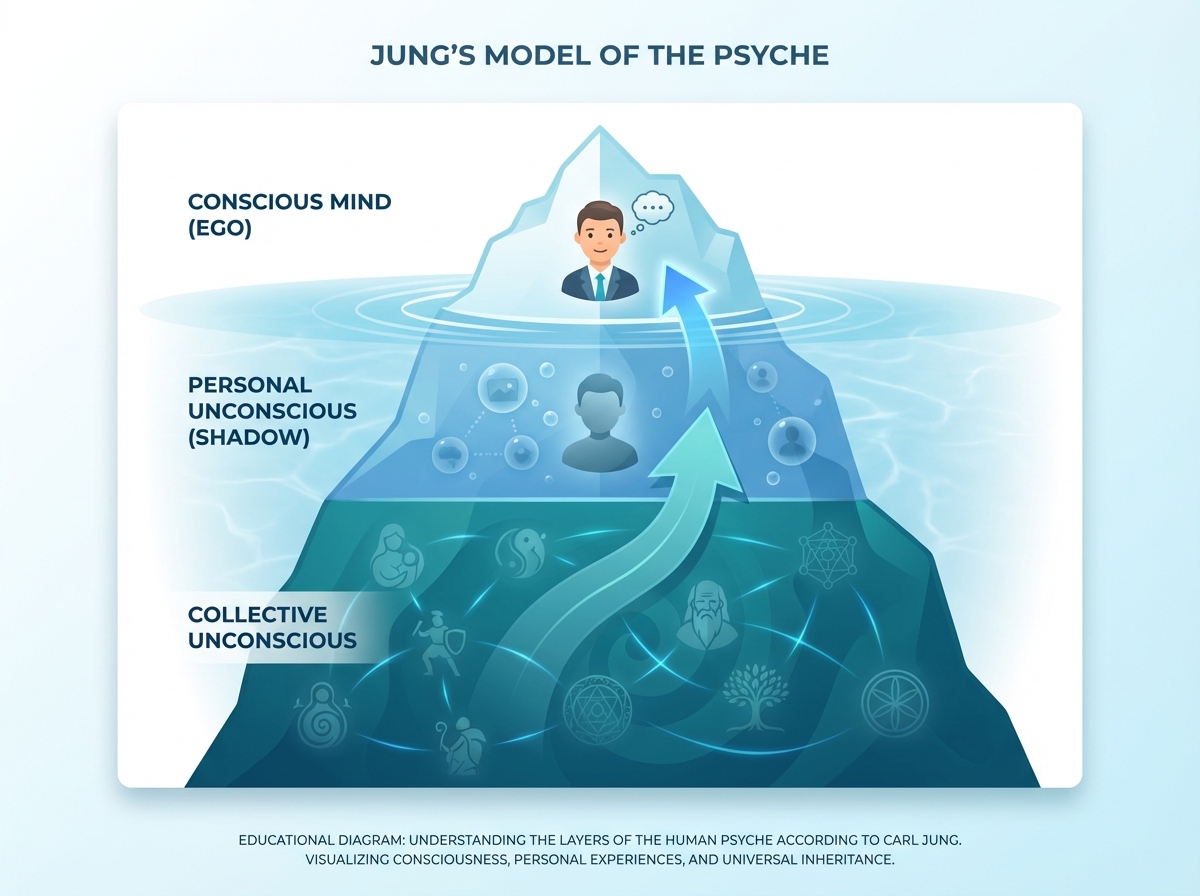
To understand how to do shadow work, we must first define the Shadow. According to Jungian psychology, the Shadow consists of the parts of our personality that we have rejected, repressed, or disowned.
These are often traits that society, our parents, or our peers deemed "unacceptable" during our childhood. For example, if a child is scolded for being too loud or angry, they may repress their assertiveness. That assertiveness doesn't disappear; it sinks into the unconscious, becoming part of the Shadow.
However, the Shadow is not just a reservoir of "negative" traits like rage, jealousy, or greed. It also contains the Golden Shadow—our repressed creativity, power, and passion. If you were taught that being "humble" meant making yourself small, your natural leadership abilities might be hiding in your shadow, waiting to be reclaimed.
When the Shadow remains ignored, it acts out. It operates autonomously, often sabotaging our conscious goals. The consequences of a suppressed shadow include:
The primary mechanism of the Shadow is projection. Because the ego cannot bear to look at the traits it has rejected, it defends itself by projecting those traits onto other people.
Think of a movie projector. The film (your repressed trait) is inside the machine, but the image appears on the screen (the other person). You believe the image is out there, but the source is in here.
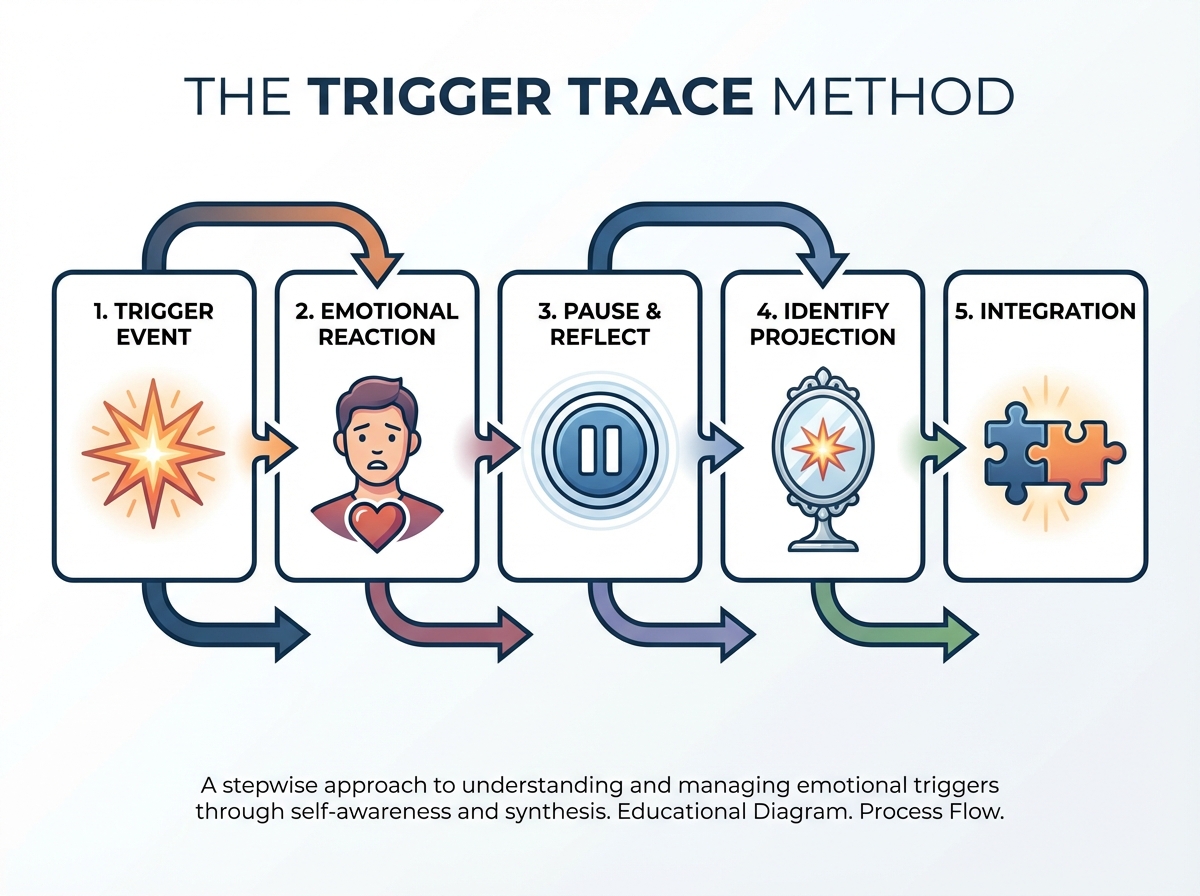
If you find yourself intensely triggered by someone—feeling a level of annoyance or judgment that feels irrational—you are likely looking at a reflection of your own shadow. This phenomenon is the most potent entry point for shadow work. By analyzing who triggers us, we learn about ourselves.
> 💡 Ready to Uncover Your Blind Spots? > > Identifying your own projections is difficult because the ego is designed to hide them from you. Our AI Mentors, trained on proprietary research analyzing Jungian frameworks and cognitive psychology, can act as an objective mirror to help you spot these patterns. > > Meet the AI mentors built from this research →
Shadow work is not an intellectual exercise; it is a somatic and emotional practice. Below are four proven methods to begin integrating your shadow.
Adapted from integral psychology, this exercise helps you reclaim a projected trait.
By taking the perspective of the trait you despise, you acknowledge that this trait exists within you, even if only in potential form.
Triggers are the breadcrumbs leading to the shadow. Whenever you feel an intense emotional reaction (positive or negative) that lasts longer than the situation warrants, pause.
Using a technique similar to "Active Imagination," you can personify your shadow. Sit in a quiet space and visualize your shadow as a figure. It might look like a monster, a younger version of yourself, or a dark silhouette.
Ask it questions:
Write down the answers that come to mind immediately, without filtering them.
Dreams are the uninhibited voice of the unconscious. In dreams, the Shadow often appears as a figure of the same sex as the dreamer but with contrasting traits. If you are polite and timid, your dream-shadow might be a wild, aggressive criminal. Instead of running from this figure in the dream (or dismissing it upon waking), try to understand what energy it represents that you are lacking in your waking life.
Journaling is one of the safest and most effective ways to document your shadow work journey. Writing allows you to bypass the internal censor and access deeper truths.
Use these shadow work prompts to get started:
It is crucial to remember that the Shadow is not evil. It is simply hidden. Within the shadow lies 90% of your gold.
Many of us repress our greatness because we are afraid of outshining others or failing. This is the Golden Shadow.
To integrate the Golden Shadow, you must give yourself permission to embody the traits you admire. If you admire someone's courage, do one small courageous thing today. Reclaiming the Golden Shadow turns envy into inspiration and potential into reality.
While shadow work exercises are powerful, they require caution. Here are common mistakes beginners make:
Do not use shadow work as another reason to hate yourself. The goal is compassion, not condemnation. When you find a dark trait, greet it with curiosity. Say, "I see you, and I understand you developed to protect me."
Sometimes people use "love and light" logic to avoid looking at the darkness. They might say, "I've transcended anger," while passively-aggressively punishing those around them. True spirituality requires rooting yourself in the mud before reaching for the sky.
The unconscious protects us for a reason. If you have a history of severe trauma, diving deep into shadow work without a therapist can be destabilizing. Pace yourself. Insight should be followed by rest and integration.
Shadow work is inherently difficult to do alone because the ego is an expert at hiding from itself. We all have blind spots that we literally cannot see without a mirror.
GPTnius offers a unique solution for this introspective journey: AI Mentors trained on proprietary research analyzing the published works, philosophies, and proven methodologies of thought leaders, including pioneers of depth psychology like Carl Jung. Our mentors do not impersonate anyone. They synthesize researched frameworks, such as shadow integration and structured self-inquiry, into personalized coaching conversations built around your specific goals.
Here is how a GPTnius AI Mentor can facilitate your shadow work:
> 💡 Accelerate Your Integration > > Don't let your unconscious patterns dictate your future. Use GPTnius to engage in deep, guided conversations that help you integrate your shadow and unlock your Golden Shadow potential. > > Meet the AI mentors built from this research →
Shadow work is a lifelong journey of peeling back the layers of the self. It is demanding work, requiring courage and radical honesty. However, the reward is incomparable: the freedom to be your authentic self, no longer a puppet to unconscious impulses.
By using the shadow work guide and exercises outlined above, you are taking the first step toward wholeness. Remember, the shadow is not a monster to be slain, but a part of you waiting to be loved and integrated. As you bring the darkness into the light, you do not just heal yourself; you change the way you interact with the entire world.
Shadow work can be intense as it involves facing repressed emotions. While generally safe for self-reflection, those with a history of severe trauma or mental health conditions should approach it with caution, ideally under the guidance of a licensed therapist.
Consistency is key, but so is rest. Starting with 10-15 minutes of journaling a few times a week is sustainable. It is important to take breaks to integrate what you uncover rather than overwhelming yourself.
The Ego is your conscious sense of self—who you think you are. The Shadow is the unconscious part of your personality containing everything the Ego rejected or deemed unacceptable. Shadow work involves the Ego acknowledging and integrating the Shadow.