Reclaim your focus with digital minimalism. Learn actionable strategies for technology detox, attention management, and living an intentional life in a noisy world.
Digital minimalism is not about rejecting technology, but about using it with extreme intentionality to support your deeply held values. By undergoing a 30-day digital declutter and reintroducing tools only when they serve a specific purpose, you can escape the attention economy, reduce anxiety, and reclaim your time for high-quality leisure and focused work.
---
We live in an era of unprecedented connectivity, yet many of us feel more fragmented than ever. The average smartphone user touches their phone 2,617 times a day. We scroll through feeds while waiting in line, check emails during dinner, and fall asleep to the glow of a screen. This constant connectivity comes at a steep price: our ability to focus, our mental well-being, and our capacity for solitude.
Enter digital minimalism. It is not merely a "technology detox" or a temporary break from social media; it is a philosophy of technology use. It challenges the assumption that "more connection is always better" and replaces it with a deliberate framework for attention management.
This article explores how to strip away the superficial noise of the digital world to make room for a focused, intentional life.
Digital minimalism is a philosophy of technology use in which you focus your online time on a small number of carefully selected and optimized activities that strongly support things you value, and then happily miss out on everything else.
Unlike a crash diet where you abandon technology entirely for a weekend only to binge later, digital minimalism is about sustainable, long-term change. It requires you to treat technology as a tool to be wielded, rather than a slot machine that plays with your psychology.
> 💡 Build a Framework for Intentional Living > > Struggling to define the values that should drive your technology use? GPTnius AI Mentors, trained on proprietary research analyzing mental models and habit systems, can help you construct a personalized philosophy for focus. > > Meet the AI mentors built from this research →
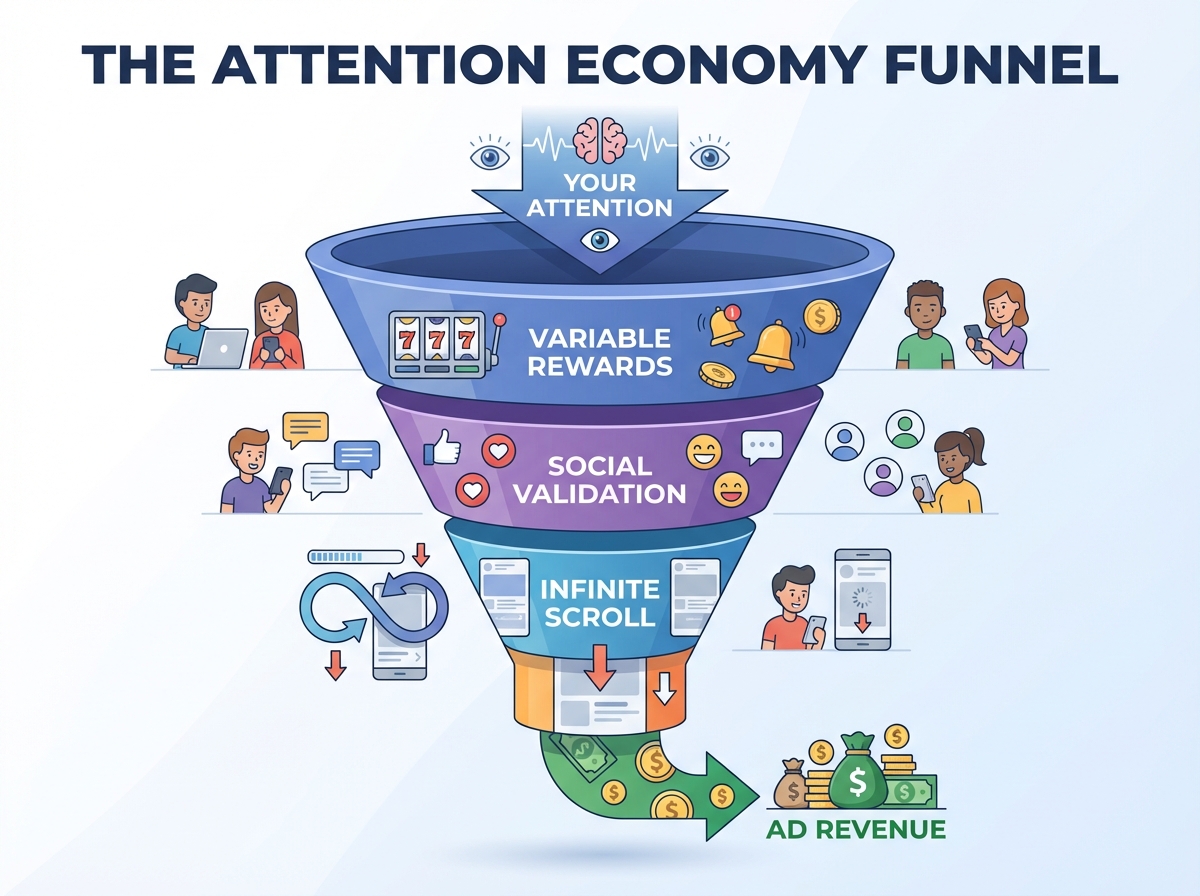
To understand why digital minimalism is necessary, we must understand the environment we are operating in. We are not just "lacking willpower"; we are fighting against an attention economy designed to keep us hooked.
Tech conglomerates leverage intermittent variable rewards—the same psychology used in slot machines—to encourage compulsive checking. Every notification is a potential reward, triggering a dopamine release that keeps us coming back.
One of the most significant casualties of this environment is solitude. Solitude is not about isolation; it is a subjective state where your mind is free from input from other minds. In the past, moments of solitude happened naturally—walking to the car, waiting for a train, or standing in line.
Today, we fill these micro-moments with digital noise. The result is "solitude deprivation," a state where we spend close to zero time alone with our own thoughts. This lack of processing time can lead to anxiety, a lack of original thinking, and an inability to regulate emotions effectively.
Implementing digital minimalism usually requires a rapid transformation rather than gradual changes. The most effective method is the 30-Day Digital Declutter.
For a period of 30 days, you will take a break from optional technologies in your life. "Optional" means that its temporary removal would not harm your daily professional or personal health.
Write these rules down. Be specific. Ambiguity is the enemy of the declutter.
During this month, two things will happen. First, you will experience withdrawal. You will reach for your phone in moments of boredom and feel a pang of anxiety when there is nothing to scroll.
Second, and more importantly, you must rediscover what you enjoy. You cannot simply remove a habit; you must replace it. If you remove three hours of screen time a day, you must fill that void with high-quality analog activities:
This step is crucial. If you do not cultivate high-quality leisure, you will inevitably slide back into digital distraction because you haven't built a better alternative.
After 30 days, do not simply reinstall everything. This is where the "minimalism" begins. For every tool you consider bringing back, ask three questions:
Once you have completed the declutter, you need tactical strategies to maintain your focus in a noisy world. Here are proven methods for intentional technology use.
Smartphones are the primary vector for distraction. Transform your device from a portal of entertainment into a utility tool:
Shift your consumption habits from breaking news to slow media. Instead of reacting to real-time updates, which are often sensationalized and shallow, focus on high-quality sources that synthesize information.
Treat communication like a meeting, not a continuous conversation. Batch your email processing into two or three sessions a day. For personal texting, don't feel obligated to respond immediately. By delaying responses, you train your network to expect that you are not always available, reducing the pressure to be constantly connected.
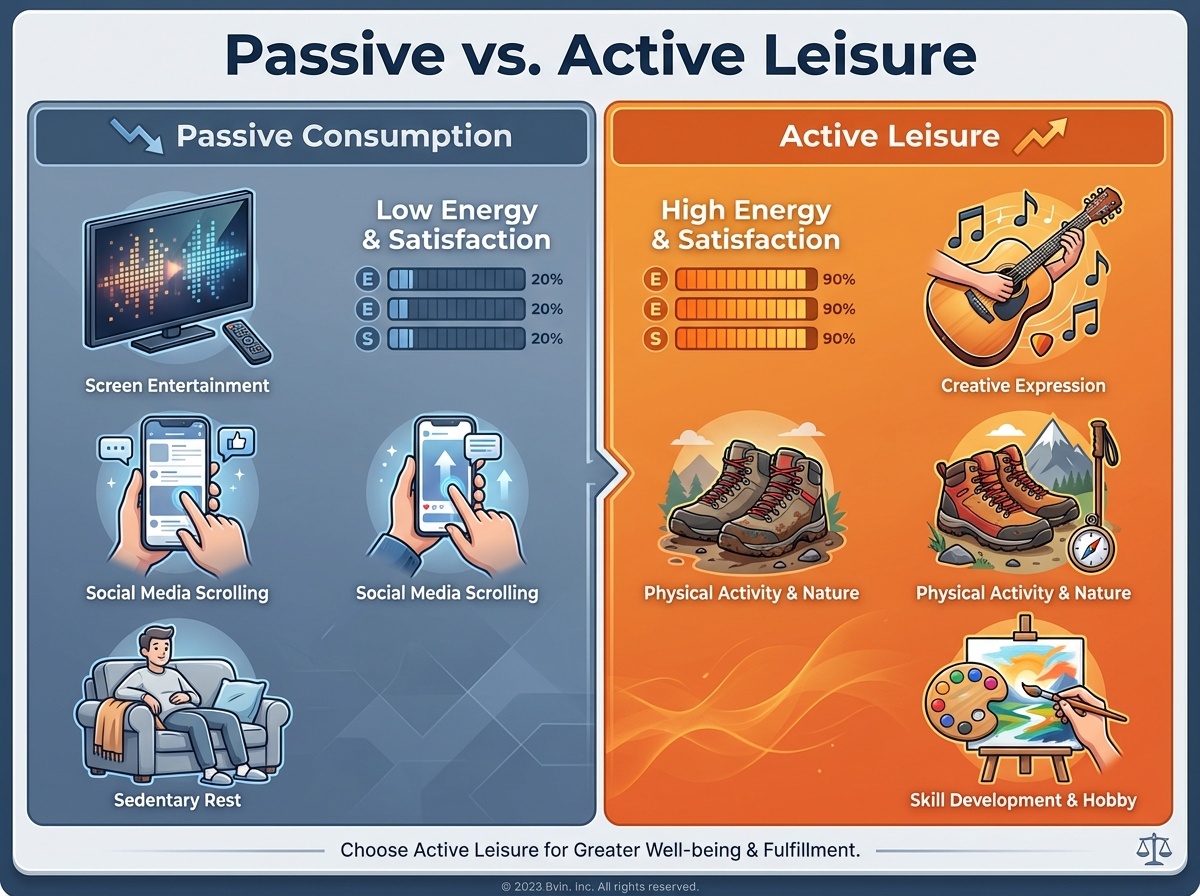
A key component of digital minimalism is the elevation of leisure. In a world of digital distractions, we have forgotten how to play and rest effectively. We often default to "passive consumption"—zoning out in front of Netflix or TikTok.
Digital minimalists prioritize active leisure. This involves expending energy to create value or build skills. This could be:
Active leisure is more demanding than passive consumption, but it is infinitely more restorative. It provides a sense of competence and autonomy that scrolling never can.
Adopting digital minimalism is a behavioral challenge that requires discipline, strategy, and self-reflection. It can be difficult to stick to your new rules when the algorithms are working against you. This is where GPTnius can facilitate your transformation.
GPTnius offers AI Mentors trained on proprietary research analyzing the published works, philosophies, and proven methodologies of thought leaders, including leading thinkers in productivity and psychology. Our mentors do not impersonate anyone. They synthesize researched frameworks, such as habit systems and the digital declutter process, into personalized coaching conversations built around your specific goals. A GPTnius mentor can help you:
By synthesizing these researched frameworks, the AI Mentor provides personalized coaching conversations that turn abstract philosophy into a concrete plan for your life.
> 💡 Ready to Reclaim Your Attention? > > Don't let the attention economy dictate your life. Partner with an AI Mentor trained on the world's best productivity frameworks to build a focused, intentional future. > > Meet the AI mentors built from this research →
Digital minimalism is not about living like a hermit; it is about living like a human. It is a choice to stop outsourcing your attention to Silicon Valley and start investing it in the things that truly matter: your work, your relationships, and your own peace of mind. By clearing away the digital clutter, you make room for a life of depth, focus, and satisfaction.
No. A digital detox is usually a temporary break, whereas digital minimalism is a permanent lifestyle philosophy regarding how you use technology intentionally.
Not necessarily. The goal is intentionality. If a social media platform strongly supports a core value and you use it in a structured way, it can be part of a minimalist lifestyle. However, many find that removing the apps from their phones is necessary.
The standard recommendation is a 30-day period. This length of time is necessary to break the addictive cycle of dopamine feedback loops and to rediscover analog leisure activities.