Discover actionable neuro-hacks to combat screen fatigue and boost brain health. Learn how digital wellness and neuroplasticity can coexist in the AI era.
We live in an era where our greatest tools are also our greatest physiological stressors. The average knowledge worker spends over 10 hours a day facing a screen, navigating a ceaseless torrent of notifications, emails, and data streams. While this connectivity drives productivity, it exerts a heavy toll on our cognitive hardware: the human brain.
Digital wellness is often mistakenly defined as simply "spending less time on your phone." However, for professionals, entrepreneurs, and students, total disconnection is rarely a viable long-term strategy. True digital wellness requires a more nuanced approach—one rooted in neuroplasticity and brain health. It involves understanding the biological mechanisms of screen fatigue and deploying targeted "neuro-hacks" to mitigate damage while maximizing cognitive efficiency.
This guide explores the neuroscience behind digital exhaustion and provides actionable frameworks to rewire your relationship with technology. By applying these principles, you can transform your digital habits from a source of drain into a system of sustainable growth.
To combat the enemy, one must understand it. Screen fatigue—often clinically referred to as Computer Vision Syndrome (CVS)—is not merely about tired eyes; it is a systemic cognitive overload.
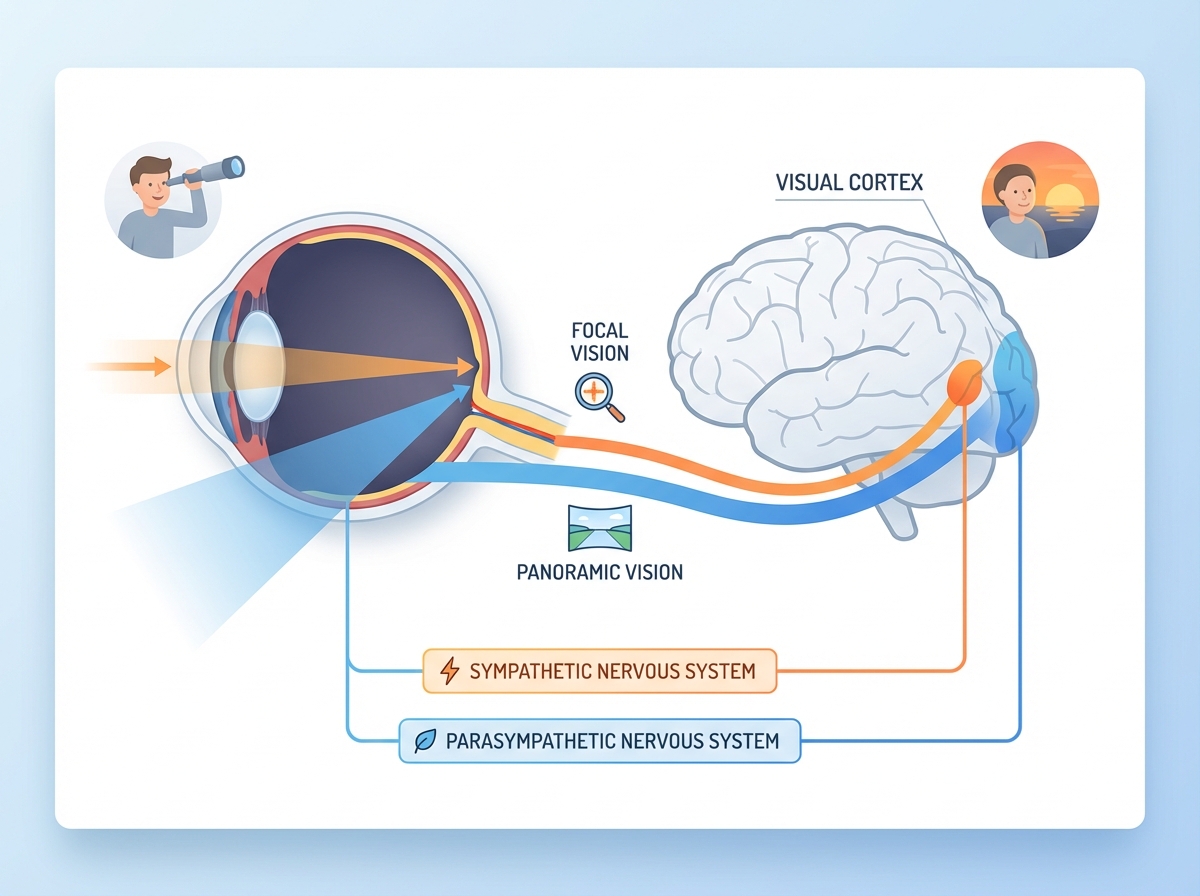
Evolutionarily, human vision was designed for dynamic scanning—shifting focus between the horizon, immediate surroundings, and objects in hand. Screens force our eyes into a fixed focal length for hours. This locks the ciliary muscles in the eye and suppresses the natural "optic flow" (the movement of images across the retina) that the brain uses to calibrate its position in space. The result is a subtle, low-grade anxiety signal sent to the amygdala.
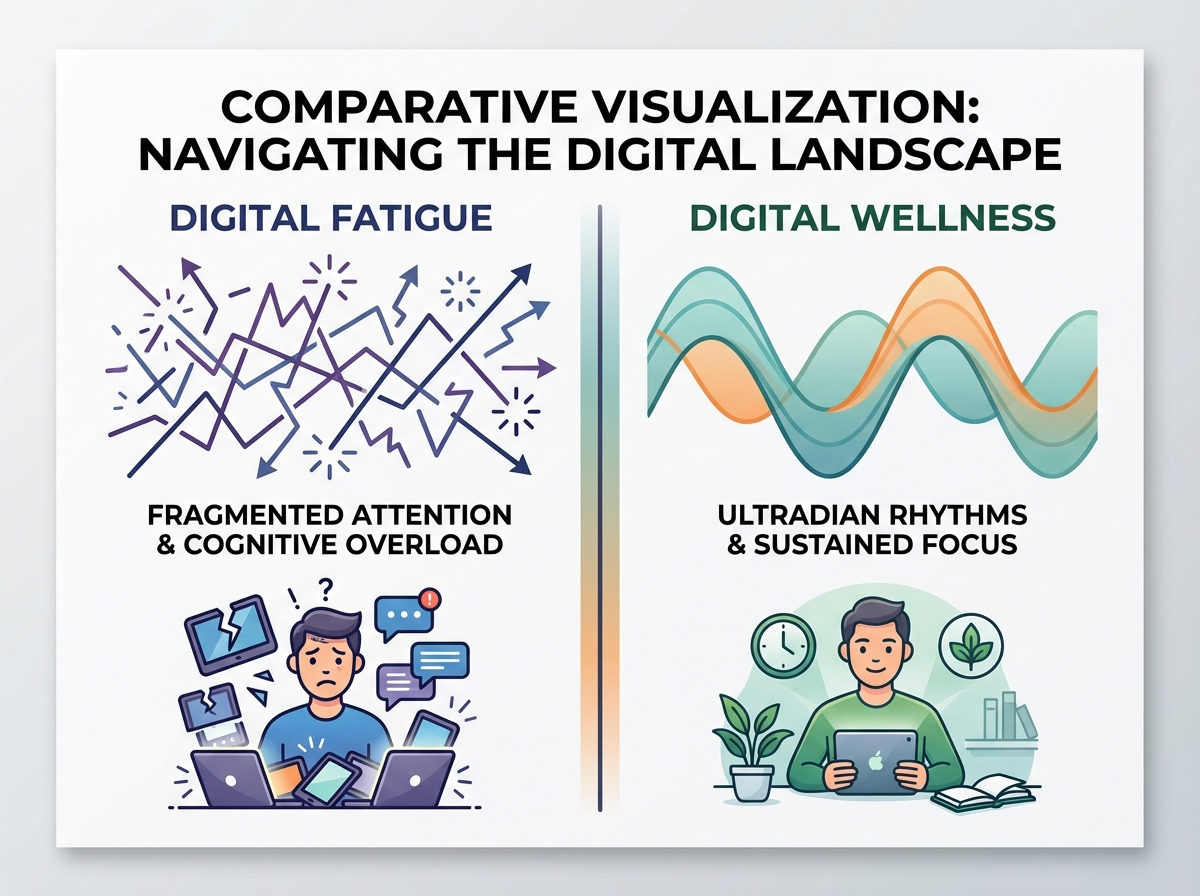
Unlike the "flow state" where the brain focuses deeply on one task, digital environments often trigger "continuous partial attention." This is a state of constant alertness where the brain scans for new information (emails, Slack pings) but never fully engages. This fragments the brain’s ability to encode long-term memories and depletes glucose in the prefrontal cortex, the area responsible for willpower and decision-making.
Every notification triggers a micro-spike of dopamine (anticipation). However, the sheer volume of information often triggers a subsequent spike in cortisol (stress) when we realize we cannot process it all. This seesaw of neurochemistry leads to burnout, irritability, and a sensation of "wired tiredness."
> 💡 Master Your Cognitive Energy > > Understanding your brain's limits is the first step. GPTnius AI Mentors, trained on research regarding productivity frameworks and energy management, can help you audit your daily habits to stop the energy leaks. > > Meet the AI mentors built from this research →
Leveraging the principles of neuroplasticity, we can train our brains to handle digital loads more effectively. These are not just tips; they are physiological interventions.
When we focus on screens, our vision narrows (focal vision), which activates the sympathetic nervous system (fight or flight). To counter this, you must engage your peripheral vision.
The Protocol:
Screens present information in 2D, but our brains are evolved for 3D navigation. Processing flat data requires more cognitive effort.
The Protocol:
Our brains operate in cycles of high focus followed by necessary rest, known as ultradian rhythms. Pushing past the 90-minute mark usually results in diminishing returns and increased error rates.
The Protocol:
It may seem counterintuitive to use Artificial Intelligence to cure digital fatigue, but when used strategically, AI is a potent lever for digital wellness.
AI tools can function as a cognitive exoskeleton. Instead of spending three hours reading and synthesizing five different reports (high screen time, high cognitive load), you can utilize AI to summarize key points, extract actionable insights, and format data (low screen time, high efficiency).
By offloading the "processing" tasks to AI, you reserve your brain power for "synthesis" and "creative application." This shifts your relationship with the screen from passive consumption (draining) to active command (energizing).
The goal is not to eliminate screens but to introduce "strategic friction." Use apps and AI settings to batch notifications. Configure your digital environment so that getting distracted is difficult, while deep work is seamless. This is Environmental Design 101 applied to the digital realm.
Understanding the theory of digital wellness is different from implementing it. This is where GPTnius bridges the gap between knowledge and action.
GPTnius offers AI Mentors that have been trained on proprietary research analyzing the published works, philosophies, and proven methodologies of thought leaders in psychology, productivity, and habit formation.
For example, you might engage with "The Architect," a mentor whose coaching style is derived from research on mental models and habit systems. You can tell The Architect, "I feel drained by 2 PM every day."
Using synthesized frameworks, the AI Mentor might:
Because these mentors are available 24/7, they act as a real-time feedback loop, helping you apply neuro-hacks exactly when you need them most.
> 💡 Build a Brain-Healthy Workflow > > Don't let screen fatigue dictate your potential. Partner with a GPTnius AI Mentor to build a personalized system that prioritizes your cognitive health and professional growth. > > Meet the AI mentors built from this research →
Digital wellness is not a luxury; it is a prerequisite for sustained high performance in the modern world. By understanding the biology of screen fatigue and applying neuro-hacks like panoramic vision and circadian alignment, you can protect your brain's plasticity and health.
Technology should be a tool that expands your mind, not a tether that exhausts it. Through intentional environmental design and the strategic use of AI mentorship, you can reclaim your cognitive energy and thrive in the digital age.
Digital wellness refers to the optimal state of health and well-being that each individual using technology is capable of achieving. It involves practicing healthy digital habits to ensure technology enhances rather than detracts from your life.
Excessive screen time, particularly involving rapid context switching, can negatively impact neuroplasticity by fragmenting attention spans and reducing the brain's ability to form deep neural connections required for long-term memory and complex problem-solving.
Common symptoms include eye strain, dry eyes, blurred vision, headaches, neck and shoulder pain, difficulty concentrating, and a general sense of mental exhaustion or irritability.
Yes. AI can help by automating repetitive tasks, summarizing large amounts of information, and helping structure workflows, thereby reducing the total amount of time and cognitive effort required to complete work on screens.