Unlock the true meaning of 'Discipline Equals Freedom.' Learn how to build discipline, establish routines, and apply Jocko Willink's philosophy for success.
In a modern world obsessed with comfort and instant gratification, the concept of discipline often carries a negative connotation. It is frequently viewed as a restriction, a punishment, or a rigid set of rules that stifles creativity and enjoyment. However, one of the most powerful philosophies in the realm of self-improvement flips this narrative on its head: Discipline Equals Freedom.
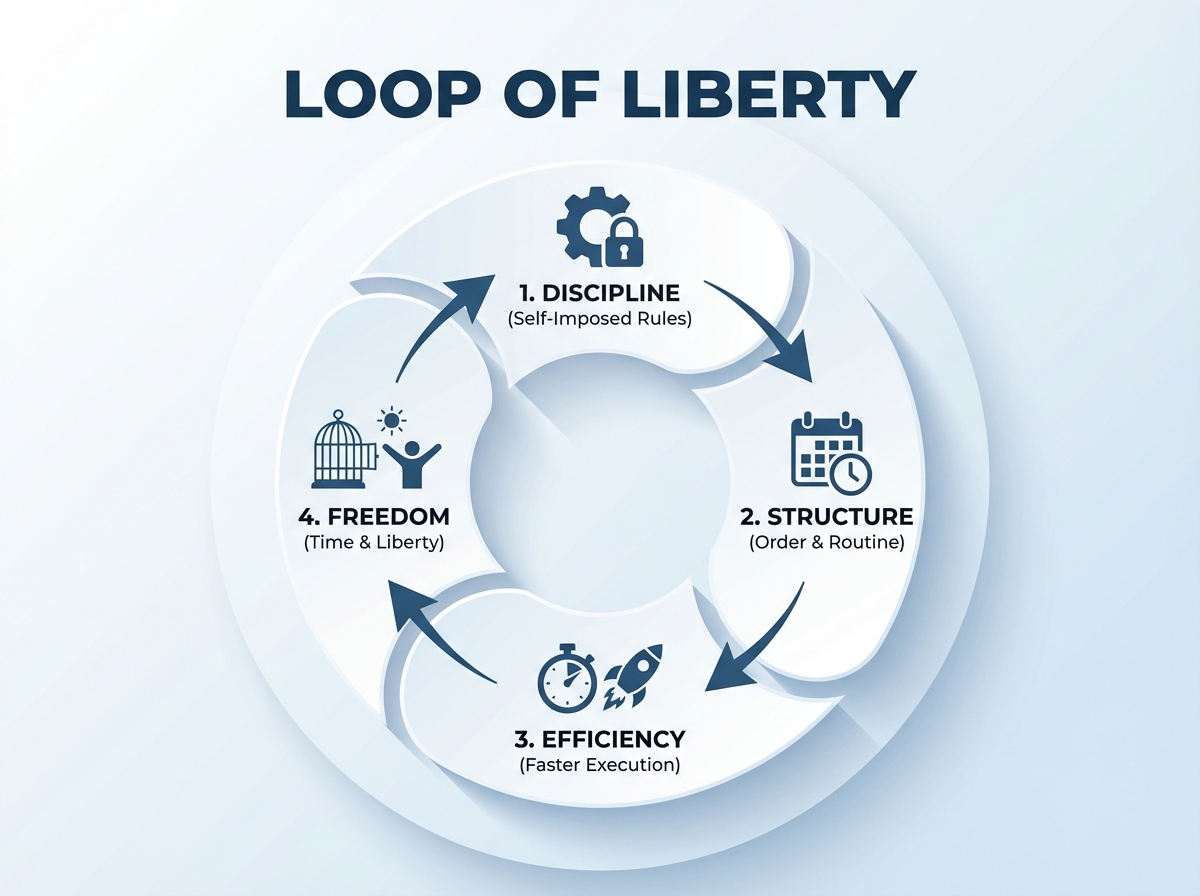
Popularized by former Navy SEAL commander Jocko Willink, this mantra is not merely a catchy slogan; it is a fundamental truth about human performance. The paradox is that by imposing strict regulations on yourself, you actually create more liberty. Without discipline, you are a slave to your impulses, your laziness, and your changing moods. By mastering discipline, you detach from the chaos of life and gain the freedom to execute your goals, manage your time, and design the life you truly want.
This article delves deep into the discipline equals freedom meaning, exploring how you can transition from a life of reactive chaos to one of proactive structure.
To understand why discipline results in freedom, we must first analyze the alternative: the lack of discipline. A lack of discipline manifests as procrastination, poor health choices, financial instability, and wasted time. When you lack the discipline to wake up early, you are rushing, stressed, and late—you have lost the freedom of a calm morning. When you lack the discipline to manage your finances, you are trapped by debt—you have lost financial freedom.
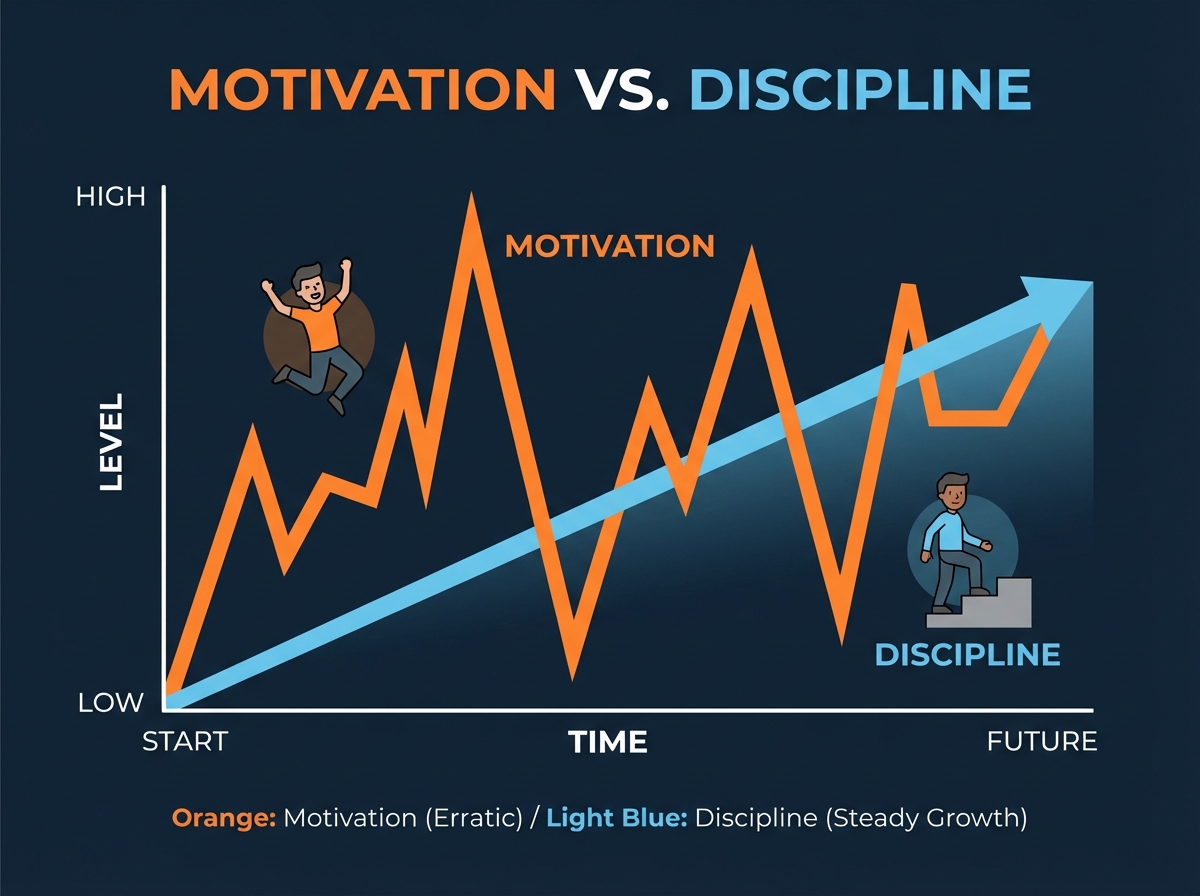
One of the critical distinctions in this philosophy is the difference between motivation and discipline. Motivation is an emotion; it is a feeling that comes and goes. Relying on motivation is a strategy for failure because you will not always feel like doing the work.
Discipline is the ability to do what needs to be done, regardless of how you feel.
When you stop negotiating with yourself—when you decide that the workout, the project, or the diet is non-negotiable—you free yourself from the mental fatigue of decision-making. You no longer have to waste energy deciding if you will do the task. The decision is made. That is freedom.
> 💡 Stop Waiting for Motivation—Build a System > > Motivation is fleeting, but a system is reliable. GPTnius AI Mentors, trained on proprietary research into habit formation and military-grade discipline frameworks, can help you construct a routine that holds up even when you don't "feel like it." > > Meet the AI mentors built from this research →
Building a lifestyle around this philosophy requires actionable steps. It is not enough to simply "try harder." You must implement structural changes to your daily existence.
A central tenet of the discipline equals freedom routine is the early wake-up. While the specific time (often cited as 4:30 AM in extreme cases) is less important than the principle, the goal is to beat the enemy—the enemy being your own desire for comfort.
Waking up early provides a psychological edge. It allows you to accomplish tasks before the rest of the world has stirred. This "pre-emptive strike" on the day guarantees that even if the rest of the day descends into chaos, you have already secured a victory. It buys you time—the ultimate freedom.
Physical exercise is the most immediate way to train the mind. The body will always want to stop when it encounters discomfort. By forcing the body to continue through physical stress, you harden the mind. This mental callous is transferable. The resilience built under a heavy barbell or during a long run translates to the resilience needed to handle a difficult business meeting or a personal crisis.
Discipline extends to what you consume. The sugar crash from a poor diet is a chain that binds you to lethargy. Disciplined eating—viewing food as fuel rather than entertainment—results in sustained energy levels. This energy provides the freedom to operate at peak cognitive performance throughout the day.
If you are wondering how to build discipline when you have historically struggled with it, the answer lies in shifting your mindset regarding failure and adversity.
When things go wrong, the disciplined response is simple: "Good."
This Stoic-adjacent approach prevents you from being a victim of circumstance. It keeps you in the driver's seat, maintaining your freedom of action regardless of external events.
There is no freedom in blaming others. When you blame your team, the economy, or your upbringing for your failures, you surrender your power to change them. By taking "Extreme Ownership" of everything in your world, you claim the authority to fix it. If it is your fault, it is fixable by you. This is the ultimate liberation from a victim mentality.
Implementing these strategies is difficult, but the benefits of discipline are compounding.
Reading about discipline is easy; applying it every day is the challenge. This is where GPTnius bridges the gap between theory and execution.
GPTnius offers AI Mentors that have been trained on proprietary research analyzing the published works, philosophies, and proven methodologies of thought leaders known for their disciplined frameworks. For example, our "Architect" mentor draws from research on habit systems and mental models, combined with proven coaching methodologies.
Here is how a GPTnius AI Mentor supports your journey:
By engaging in guided discussions with an AI Mentor, you aren't just reading about principles; you are actively practicing them with a strategic partner.
> 💡 Forge Your Iron Will Today > > You don't have to fight the battle for self-mastery alone. Leverage the power of AI Mentors trained on the world's most effective discipline frameworks to keep you on the path. > > Meet the AI mentors built from this research →
Discipline is not a destination; it is a daily practice. It is the constant battle against the easy path. The philosophy that Discipline Equals Freedom serves as a reminder that the restrictions we place on ourselves are the very things that liberate us from mediocrity. By embracing the early mornings, the hard work, and the ownership of our actions, we earn the right to live life on our own terms.
The phrase means that by imposing strict self-control and structure on your life, you eliminate chaos and procrastination, thereby gaining the freedom of time, health, and financial security.
Start small. Focus on one 'keystone habit' like waking up at the same time every day. Stop relying on motivation (feeling like doing it) and focus on discipline (doing it because it must be done).
While it appears rigid, the structure actually reduces stress. By automating basics like sleep, diet, and exercise, you free up mental energy for creativity and relaxation, making life feel less chaotic.