Stop relying on willpower. Learn how to bridge the intention-action gap using the psychology of Implementation Intentions and AI-driven accountability.
We have all been there. You sit down with the best intentions. You have a clear goal: study for three hours, finish that report, or finally organize your digital workspace. You feel motivated. You feel ready. And then, three hours later, you realize you have spent the entire time deep-diving into obscure Wikipedia articles or scrolling through social media feeds.
This phenomenon is not a character flaw. It is a well-documented psychological occurrence known as the Intention-Action Gap. It is the disconnect between what we plan to do and what we actually do when the moment of action arrives.
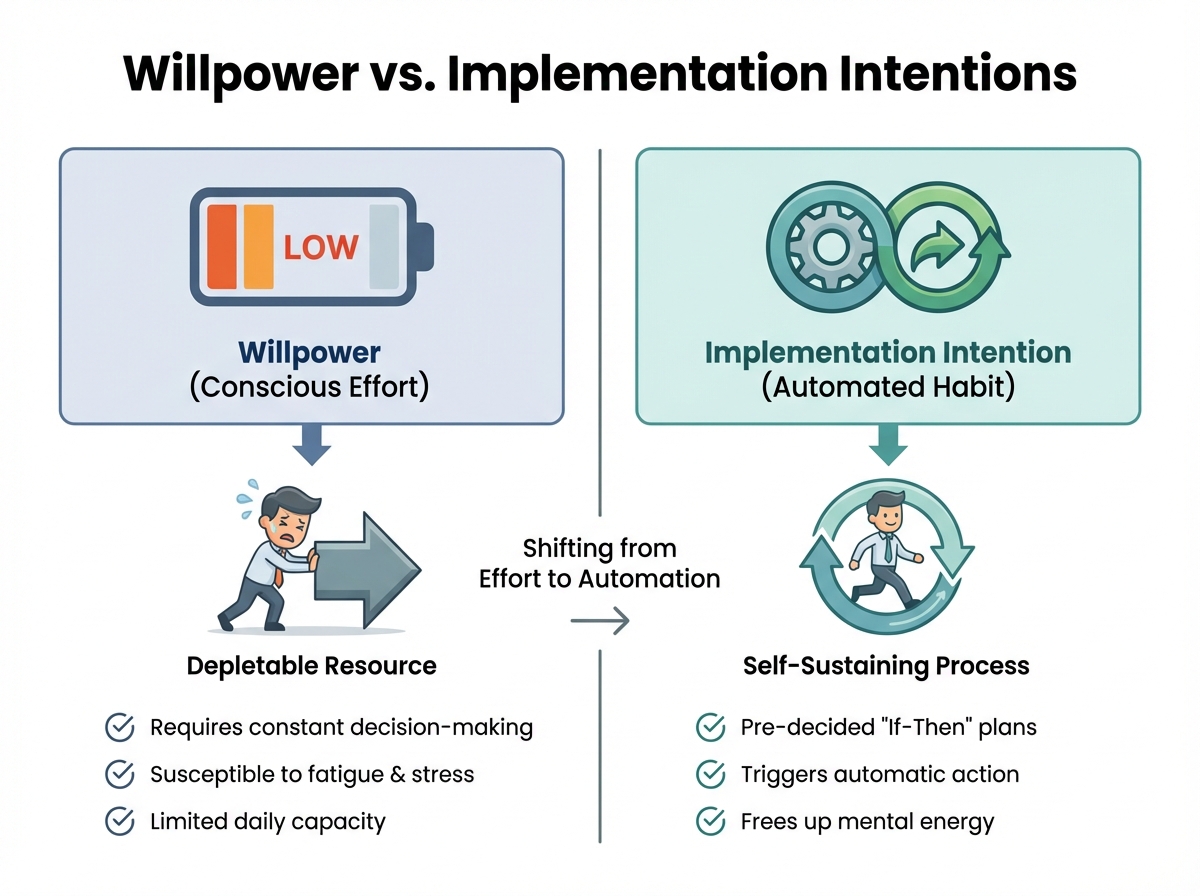
For students and professionals alike, the standard solution is usually "try harder." We tell ourselves we just need more discipline. But relying solely on willpower is a losing strategy. Willpower is a finite resource, easily depleted by stress, fatigue, or decision paralysis. To truly master procrastination busting, we need to move beyond brute force and leverage the mechanics of how our brains form habits.
This is where Implementation Intentions come into play—a strategy backed by decades of research in behavioral psychology—and where modern AI tools can elevate this analog concept into a dynamic, foolproof system for success.
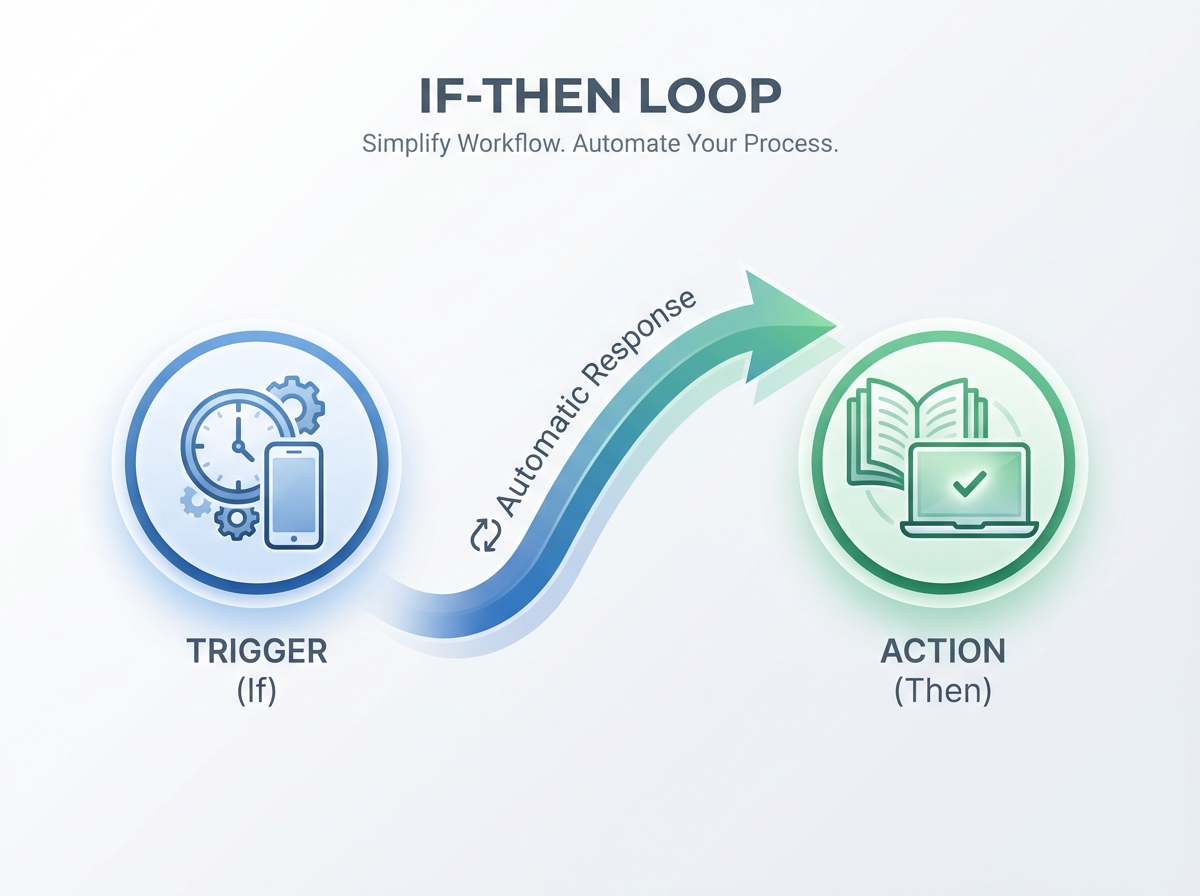
Implementation Intentions were first introduced by psychologist Peter Gollwitzer in the late 1990s. The concept is deceptively simple but neurologically profound. While a standard goal looks like "I want to achieve X," an implementation intention takes the form of:
"If [Situation X] arises, then I will perform [Response Y]."
Standard goals (e.g., "I will study more") are vague. They require you to make a decision in the heat of the moment—precisely when your willpower is weakest. Implementation intentions, however, pre-load the decision. You decide now what you will do later.
When you form an implementation intention, you are essentially programming a trigger into your environment. You link a specific situational cue (the "If") with a directed behavior (the "Then").
Research suggests that this creates a heightened state of accessibility for the cue. Your brain begins scanning the environment for that specific situation. Once the cue is detected, the response follows almost automatically, bypassing the need for conscious deliberation. You are not deciding to study; you are executing a pre-written script.
> 💡 Turn Psychology into Action with AI > > Struggling to identify your triggers? GPTnius AI Mentors, trained on proprietary research into behavioral frameworks, can help you analyze your habits to create bulletproof "If-Then" plans. > > Meet the AI mentors built from this research →
To write an effective implementation intention, you must first understand the root cause of your procrastination. It is rarely about laziness. More often, it is about emotional regulation. We procrastinate to avoid negative feelings associated with a task: boredom, anxiety, insecurity, or overwhelm.
Before you can automate your success, you must identify the friction points. Here are the three most common categories of procrastination triggers:
This is the difficulty of simply getting started. The task feels too big, and you don't know the first step.
This occurs when you have started, but an external or internal interrupt pulls you away.
This is the fear that the output won't be good enough, leading to constant editing or refusal to finish.
Once you have identified your triggers, you can draft your protocols. The key is specificity. Vague intentions like "If I get distracted, I will focus" do not work. The brain needs concrete instructions.
Here are effective examples of Implementation Intentions for common academic and professional scenarios:
While the "If-Then" framework is powerful, it has a limitation: human error. We often fail to identify our true triggers, or we create "Then" responses that are unrealistic. This is where AI-driven learning and mentorship transforms the process.
By utilizing AI tools, specifically those designed for mentorship and coaching, you can treat your planning process as an iterative dialogue rather than a static journal entry. Here is how AI elevates this psychological framework:
Writing a plan on paper is safe. Reality is chaotic. An AI Mentor can act as a stress-tester for your implementation intentions. You can present your plan to the AI, and it can simulate obstacles you haven't thought of.
Often, we don't know why we procrastinate. We just know we lost three hours. By logging your day with an AI Mentor, the system can help you identify patterns you miss.
For example, you might realize through guided reflection that you always procrastinate on Tuesdays. The AI might help you uncover that your Tuesday morning class leaves you mentally drained, suggesting a need for a restorative break before you attempt deep work. The "If" wasn't laziness; it was fatigue.
Static plans fail when circumstances change. If your implementation intention is "If it is 7:00 PM, then I study," but you have a family emergency, the plan breaks, and you feel like a failure. AI Mentors can help you generate "Coping Plans"—a secondary layer of implementation intentions designed for when the primary plan fails.
Once you have mastered the basic "If-Then" loop, you can begin Habit Stacking, a concept popularized by researchers and authors like BJ Fogg and James Clear. This involves using the completion of one habit as the "If" trigger for the next.
This creates a momentum chain. The cognitive load decreases with each step because you aren't making decisions; you are riding a wave of automated behaviors. However, building these chains requires careful architectural planning to ensure one link naturally leads to the next without friction.
Understanding the theory of Implementation Intentions is only the first step. The challenge lies in consistent application and refinement. This is where GPTnius provides a distinct advantage.
GPTnius offers AI Mentors trained on proprietary research analyzing the published works, philosophies, and proven methodologies of thought leaders, including leading researchers on behavioral psychology and productivity. Our mentors do not impersonate anyone. They synthesize researched frameworks, such as implementation intentions and habit systems, into personalized coaching conversations built around your specific goals. This allows the AI to do more than just chat; it helps you engineer your environment for success.
When you engage with a GPTnius mentor, you can:
> 💡 Build Your Personal Success System > > Don't let another day slip away. Let GPTnius AI Mentors help you design the Implementation Intentions that will turn your goals into reality. > > Meet the AI mentors built from this research →
Procrastination is not a destiny; it is a mechanism. By understanding the mechanics of the Intention-Action gap and applying the logic of Implementation Intentions, you can bypass the frailty of willpower. You are essentially hacking your own operating system, installing subroutines that ensure you take action even when you don't feel like it.
When you combine this proven psychological framework with the analytical power and personalized guidance of AI mentorship, you create a formidable defense against distraction. The path to student success and personal mastery isn't about being tougher on yourself; it's about being smarter with your strategy.
Implementation Intentions are specific plans that link a situational cue (the 'If') with a goal-directed response (the 'Then'). They are designed to automate behavior and bypass the need for willpower in the moment.
AI tools, particularly AI Mentors like those at GPTnius, can help identify hidden procrastination triggers, stress-test your plans, and provide accountability to ensure you stick to your 'If-Then' protocols.
Rarely. Psychologists define procrastination as an emotional regulation failure. It is often driven by anxiety, fear of failure, perfectionism, or overwhelm, rather than a lack of desire to work.