Discover how chronic stress and cortisol damage the hippocampus and learn actionable neuroplasticity strategies to reverse burnout and restore brain health.
We often wear burnout as a badge of honor. In the modern pursuit of personal development and professional success, we push our cognitive limits, assuming our brains are inexhaustible machines. However, neuroscience tells a different story. The feeling of "brain fog," the inability to focus, and the sudden forgetfulness that accompanies high-pressure periods are not just psychological symptoms—they are signs of physiological damage.
At the center of this struggle is a microscopic war between stress and cortisol and a critical brain structure called the hippocampus. The hippocampus is the seat of learning, memory, and emotional regulation. When we exist in a state of chronic stress, we aren't just feeling tired; we are actively eroding the neural architecture required for high performance.
Understanding the biological mechanisms of stress is the first step toward mitigating them. By leveraging the principles of neuroplasticity & brain health, alongside modern tools like AI learning, we can not only halt this damage but reverse it, rebuilding a more resilient brain.
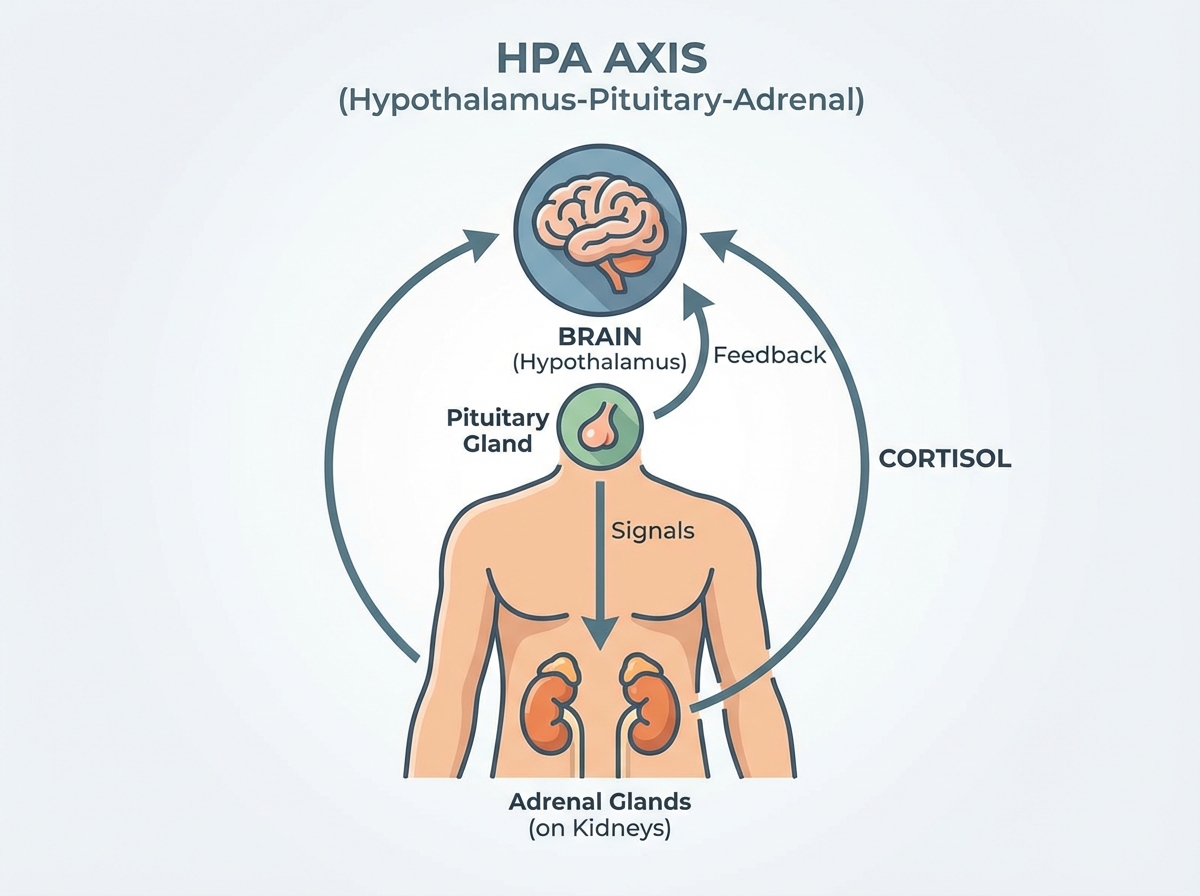
To understand why burnout happens, we must look at the body's stress response system, known as the HPA axis (Hypothalamus-Pituitary-Adrenal axis).
When your brain perceives a threat—whether it’s a tiger in the grass or an overflowing inbox—the hypothalamus signals the pituitary gland, which then signals the adrenal glands to release glucocorticoids, primarily cortisol. In short bursts, cortisol is helpful. It mobilizes glucose for energy, suppresses non-essential functions (like digestion), and sharpens focus. This is the "fight or flight" response.
The problem arises when the alarm never turns off. In a state of chronic stress, cortisol levels remain elevated. While most of the brain handles cortisol reasonably well, the hippocampus is uniquely vulnerable. It is dense with glucocorticoid receptors, making it highly sensitive to cortisol signals.
When flooded with excess cortisol for prolonged periods, the following occurs:
Simply put: Chronic stress can physically shrink the part of your brain responsible for remembering facts and regulating your mood. This provides a biological basis for why stressed individuals often struggle with memory lapses and emotional volatility.
> 💡 Stop the Cortisol Cycle with Strategic Thinking > > Understanding the biology of stress is powerful, but applying frameworks to manage it is transformative. Our AI Mentors, trained on proprietary research analyzing the mental models of resilient leaders, can help you build systems to reduce cognitive load. > > Meet the AI mentors built from this research →
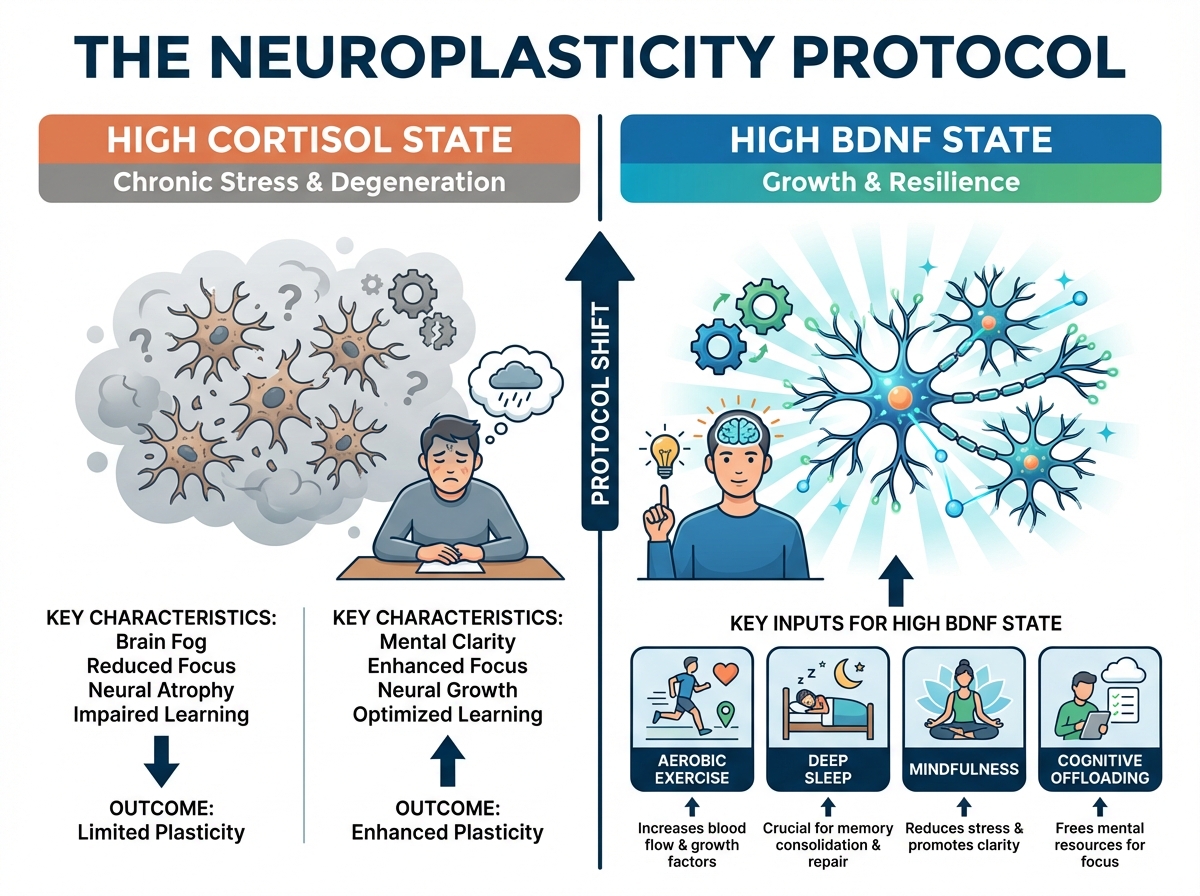
The good news is that the brain is not static. Neuroplasticity describes the brain's ability to reorganize itself by forming new neural connections. Even after periods of high stress, the hippocampus retains the ability to regrow and repair—a phenomenon known as adult neurogenesis.
To activate this repair kit, we need to boost a protein called Brain-Derived Neurotrophic Factor (BDNF). Think of BDNF as fertilizer for your neurons. It supports the survival of existing neurons and encourages the growth of new synapses and neurons.
Research consistently shows that aerobic exercise is one of the most potent triggers for BDNF release. You don't need to run a marathon; moderate-intensity cardio (keeping your heart rate up for 30 minutes) has been linked to increased hippocampal volume. It helps flush cortisol from the system and triggers the release of endorphins and endocannabinoids, which counteract the stress response.
During deep sleep (specifically Slow Wave Sleep), the brain's glymphatic system opens up to wash away metabolic waste products that accumulate during the day. Chronic sleep deprivation elevates baseline cortisol levels the following day, creating a vicious cycle. Prioritizing sleep is not passive rest; it is active neurological maintenance.
Meditation is often dismissed as "woo-woo," but fMRI scans reveal its tangible impact. Regular mindfulness practice has been shown to decrease the density of the amygdala (the brain's fear center) and increase the thickness of the prefrontal cortex and hippocampus. By training the brain to observe stress rather than react to it, you dampen the trigger of the HPA axis.
In the digital age, a significant source of stress is "decision fatigue" and information overload. The prefrontal cortex has a limited capacity for processing information. When we overload it, we trigger the stress response.
This is where AI learning and assistive technology transition from productivity tools to mental health assets. By externalizing executive functions, we can protect our brains from the micro-stressors that contribute to burnout.
Building a "Second Brain"—a system of digital note-taking and organization—relieves the hippocampus of the burden of holding short-term details. When you trust a system to remember your tasks and ideas, your brain relaxes its vigilance.
AI takes this a step further. Instead of just storing information, AI can process it. Using AI tools to summarize complex documents, schedule tasks, or brainstorm solutions reduces the cognitive load required to start a task. This reduction in friction lowers the psychological threshold of "effort," preventing the spike in cortisol associated with feeling overwhelmed.
Knowledge about cortisol and neuroplasticity is essential, but implementation is where the change happens. GPTnius offers AI Mentors that have been trained on proprietary research analyzing the published works, philosophies, and proven methodologies of thought leaders in psychology, productivity, and leadership.
Here is how a GPTnius Mentor can assist in protecting your brain health:
> 💡 Reclaim Your Cognitive Capacity > > Don't let chronic stress erode your potential. Engage with AI Mentors trained on the world's best frameworks to build a resilient mind and a sustainable workflow. > > Meet the AI mentors built from this research →
Your hippocampus is resilient, but it is not invincible. The modern environment is designed to keep your HPA axis permanently activated, flooding your system with cortisol and undermining your ability to think, learn, and remember. By combining biological strategies—like exercise and sleep—with technological strategies like AI-assisted cognitive offloading, you can protect your brain from burnout. Treat your neural health with the same rigor you treat your professional goals; your ability to succeed depends entirely on the machinery inside your skull.
While chronic stress can cause dendritic atrophy and shrink the hippocampus, the brain is neuroplastic. With the right interventions—such as exercise, sleep, and stress management—the hippocampus can regrow connections and volume.
Cortisol binds to receptors in the hippocampus, the brain's memory center. Excess cortisol inhibits the recall of existing memories and prevents the formation of new ones, leading to the 'brain fog' often associated with stress.
Yes, by serving as a tool for 'cognitive offloading.' AI can handle data processing, organization, and planning, which reduces decision fatigue and lowers the cognitive load on the brain, thereby reducing stress triggers.
Physiological sighs (double inhale, long exhale) and moderate-intensity aerobic exercise are among the fastest ways to metabolize circulating cortisol and reset the nervous system.