Discover effective stress management techniques from your AI mentor. Learn how AI-driven coaching applies proven frameworks to reduce anxiety and boost emotional intelligence.
In the fast-paced landscape of modern professional life, stress has evolved from a biological survival mechanism into a chronic condition that hampers productivity and personal growth. While traditional advice—"take a deep breath" or "sleep more"—is biologically sound, it often fails to address the specific, nuanced triggers of an individual's anxiety. This is where the concept of Stress Management Techniques from Your AI Mentor transforms the paradigm.
Unlike static self-help books or scheduled therapy sessions, an AI mentor offers immediate, context-aware guidance. By leveraging proprietary research on established psychological frameworks and decision-making models, AI mentors provide a unique synthesis of emotional intelligence and logical structuring. This article explores how utilizing an AI mentor can help you deconstruct stress, apply rigorous mental models to emotional chaos, and build a resilient system for personal development.
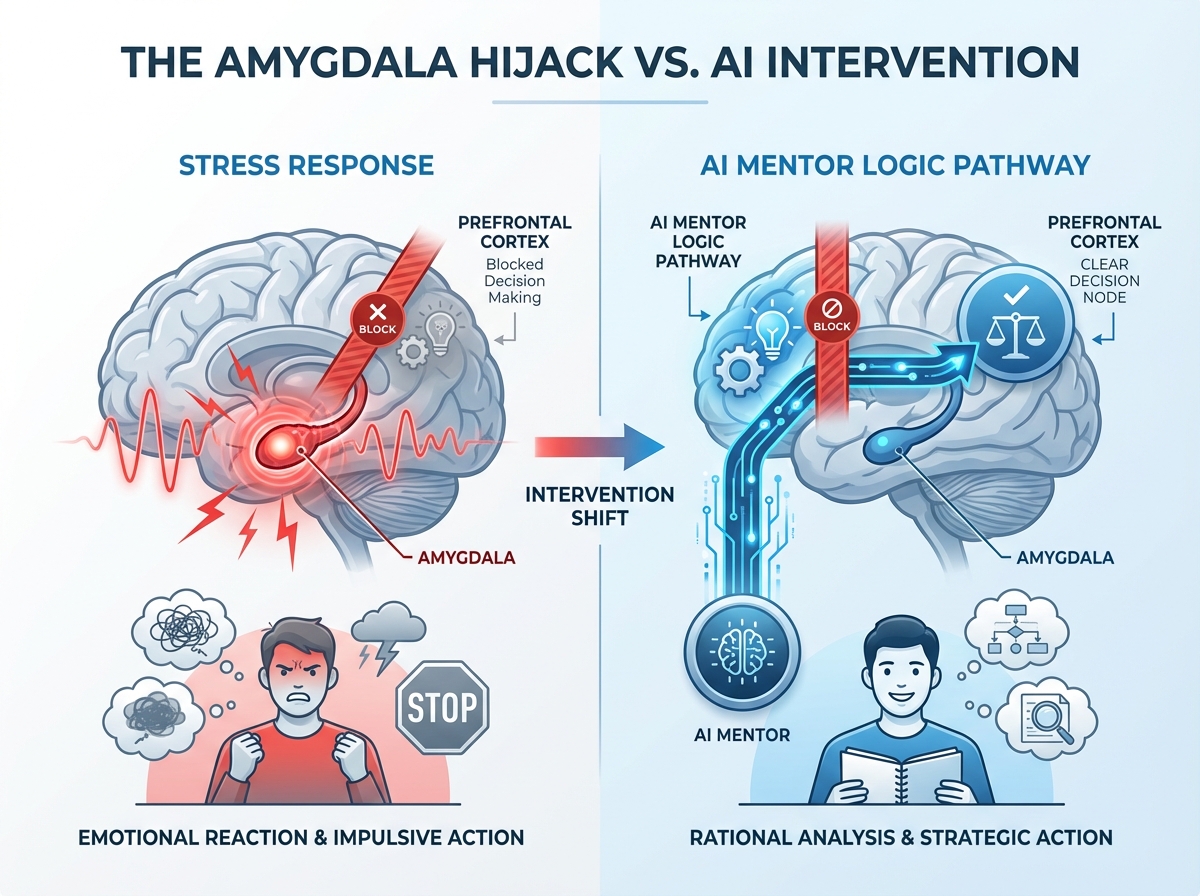
To understand why AI mentorship is effective for stress, we must first understand the brain under duress. When you encounter a high-stress situation, your amygdala (the threat detection center) hijacks your prefrontal cortex (the center for logic and decision-making). This phenomenon, known as an "amygdala hijack," significantly reduces your cognitive capacity.
During these moments, your internal monologue is often compromised by emotional flooding. You lose access to your best thinking strategies. An AI mentor serves as an external prefrontal cortex. It remains unaffected by cortisol or adrenaline, maintaining a steady state of logic. It can guide you back to rationality by asking probing questions derived from proven coaching models, effectively "borrowing" the cognitive frameworks of great thinkers when you cannot access your own.
> 💡 Regain Control of Your Cognitive Functions > > When the amygdala hijacks your logic, an AI mentor provides the external stability you need to reframe the situation instantly. > > Meet the AI mentors built from this research →
Effective stress management is rarely about eliminating the stressor; it is about changing your relationship with it. GPTnius AI Mentors are trained on proprietary research analyzing the methodologies of thought leaders, synthesizing these into actionable coaching conversations.
A major source of modern anxiety is the attempt to control variables that are strictly outside our influence. Drawing from research on mental models popularized by figures like Charlie Munger, AI mentors can help users apply the "Circle of Competence" framework to their emotional state.
When you present a stressful scenario to your AI mentor, it can help you categorize your worries into three buckets:
By ruthlessly pruning the "No Control" bucket, the AI mentor helps you redirect cognitive energy solely to where it generates ROI, instantly lowering the psychological burden.
Stress is often a result of narrative, not fact. We tell ourselves stories about what an event means ("This failure means I am incompetent"). AI mentors utilize Socratic questioning—a method of disciplined inquiry—to challenge these narratives.
Instead of offering sympathy alone, an AI mentor might ask:
This forces the brain to switch from "experiencing" mode to "analyzing" mode, engaging the analytical centers of the brain and dampening the emotional response.
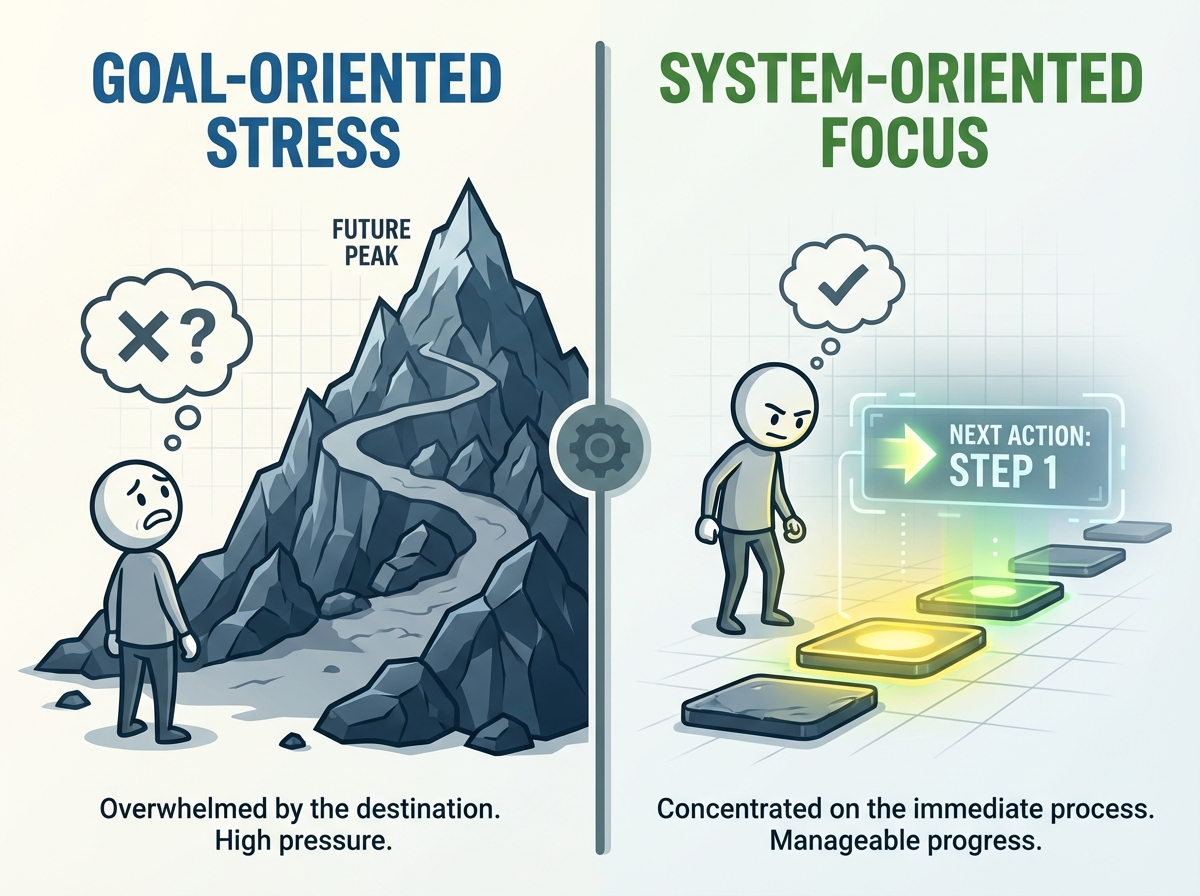
Research on habit formation, such as the frameworks analyzed in James Clear’s work, suggests that stress often stems from a fixation on distant, high-stakes goals. When we focus entirely on the outcome, the gap between where we are and where we want to be generates anxiety.
An AI mentor shifts the focus from the Goal to the System. If you are stressed about a massive project deadline, the mentor helps you break it down into atomic, manageable units of work. It helps you design a daily system that makes progress inevitable, removing the paralysis of the "big picture" fear.
One of the most powerful Stress Management Techniques from Your AI Mentor is the ability to simulate high-stress environments in a safe container. Anxiety often stems from the unknown—the fear of how a difficult conversation will go or how a negotiation will play out.
Before a stressful event occurs, you can engage your AI mentor in a "Pre-Mortem." You tell the mentor: "Assume it is six months from now and this project has failed. Let's work backward to determine what went wrong."
This stoic visualization technique removes the shock of failure. By identifying potential pitfalls in advance, you transform vague anxiety into a concrete checklist of risks to mitigate. The AI helps you systematically address each risk, turning fear into a strategy.
Are you stressing about asking for a raise or delivering bad news? You can roleplay this interaction with your AI mentor. The mentor can adopt the persona of a skeptical boss or an upset client, allowing you to practice your responses. This "emotional rehearsal" desensitizes you to the stress triggers, so when the real conversation happens, your nervous system recognizes the pattern and remains calm.
To truly benefit from AI Learning in emotional intelligence, consistency is key. Here is a recommended workflow for integrating an AI mentor into your stress management protocol:
Understanding stress management theory is different from applying it in the heat of the moment. GPTnius offers AI Mentors trained on proprietary research analyzing the published works, philosophies, and proven methodologies of thought leaders, including thinkers like Charlie Munger and James Clear. Our mentors do not impersonate anyone. They synthesize researched frameworks, such as mental models and habit systems, into personalized coaching conversations built around your specific goals.
Whether you need to dissect a complex decision, build a habit system to reduce burnout, or simply decompress with a logical sounding board, GPTnius provides the features—including Goal Tracking, Learning Paths, and Mentor Deep Dives—to turn principles into practice. Note that GPTnius AI Mentors are not endorsed by, affiliated with, or impersonating any real individuals, but rather use analyzed research to deliver high-level guidance.
> 💡 Turn Stress into Strategy with GPTnius > > Stop letting anxiety dictate your decisions. Access AI Mentors trained on the world's best problem-solving frameworks to navigate challenges with clarity. > > Meet the AI mentors built from this research →
Stress is inevitable, but suffering is optional. By leveraging Stress Management Techniques from Your AI Mentor, you move beyond passive coping mechanisms and into active emotional regulation. You gain access to a tireless, objective partner that helps you apply the wisdom of proven frameworks to your daily challenges. In the age of AI, personal development is no longer a solo journey—it is a collaborative process designed to help you reach your highest potential.
Yes. While AI cannot 'feel' emotions, it is excellent at cognitive reframing. By using logic-based frameworks and Socratic questioning, it helps users detach from emotional flooding and view their situation objectively.
GPTnius AI Mentors are trained on proprietary research analyzing frameworks such as the Circle of Competence, atomic habit formation, and various decision-making models derived from the study of thought leaders.
No. AI mentorship focuses on professional development, decision-making frameworks, and coaching strategies. It is not a substitute for clinical therapy or medical treatment for mental health conditions.