Discover how AI identifies motivation styles to provide personalized coaching. Learn how technology adapts to your emotional intelligence for sustainable personal growth.
We have all been there: You read a best-selling book on productivity, feel a surge of inspiration, and overhaul your entire daily routine. For three days, you are unstoppable. By day four, the enthusiasm wanes. By day seven, you are back to your old habits, wondering why the method that worked for millions didn't work for you.
The problem isn't a lack of discipline; it is a misalignment of motivation styles.
Traditional personal development resources are static. A book cannot tell if you are driven by fear of failure or the joy of mastery. A pre-recorded video course cannot detect when your energy is low and switch from "drill sergeant" to "empathetic listener." This is where Artificial Intelligence is revolutionizing the landscape of Emotional Intelligence & Personal Growth.
By leveraging natural language processing and pattern recognition, AI tools are moving beyond generic advice to understand the specific psychological triggers that keep individuals moving. This guide explores the science of motivation styles and how adaptive AI is becoming the ultimate accountability partner.
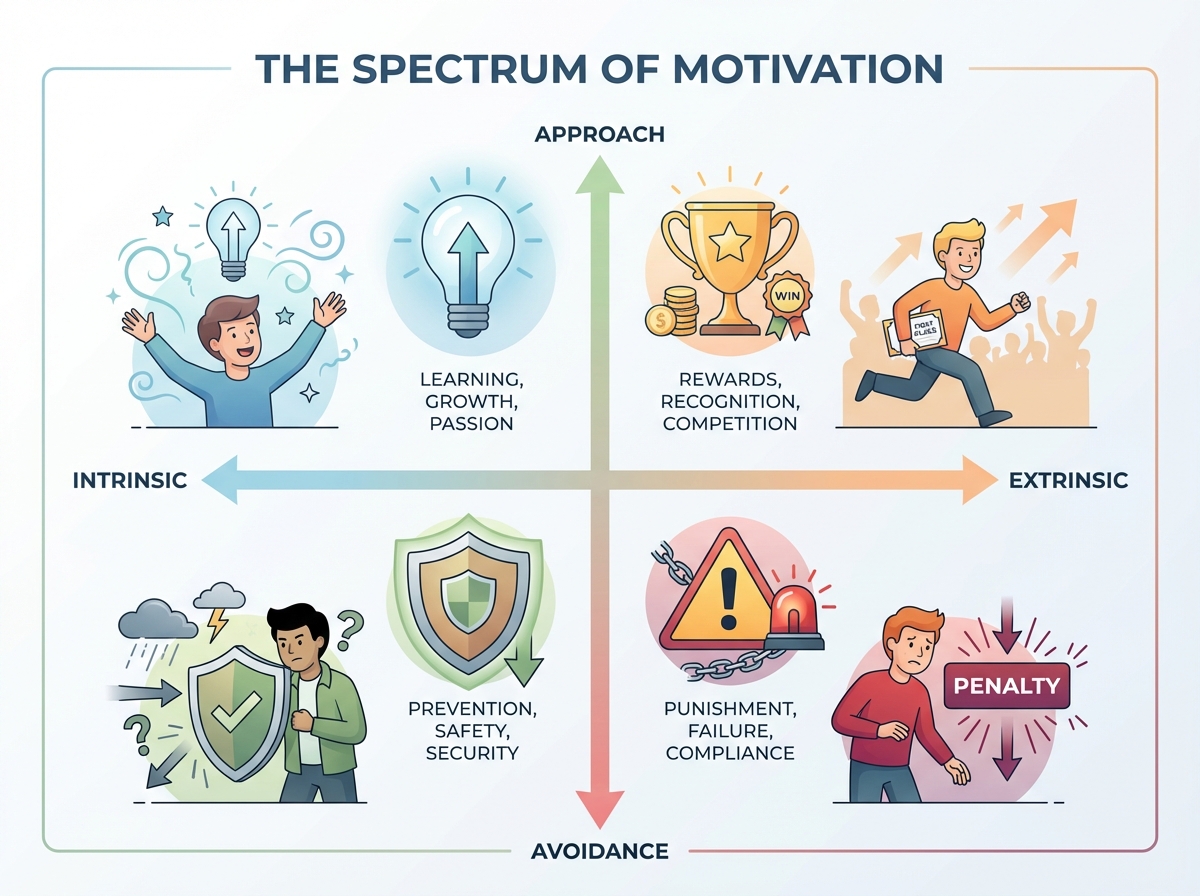
Before understanding how AI adapts to you, it is crucial to understand the framework of human drive. Psychologists generally categorize motivation into several distinct styles. Understanding where you fall on this spectrum is the first step toward sustained personal development.
This is the most fundamental divide in behavioral psychology.
David McClelland’s seminal research identified three primary drivers:
An AI trained on these psychological frameworks can detect which of these drivers is dominant in your language and adjust its feedback loop accordingly.
> 💡 Stop Guessing What Drives You > > struggling to maintain momentum? It might be because your current strategy conflicts with your natural motivation style. An AI Mentor can analyze your responses to determine if you need tough love or logical frameworks. > > Meet the AI mentors built from this research →
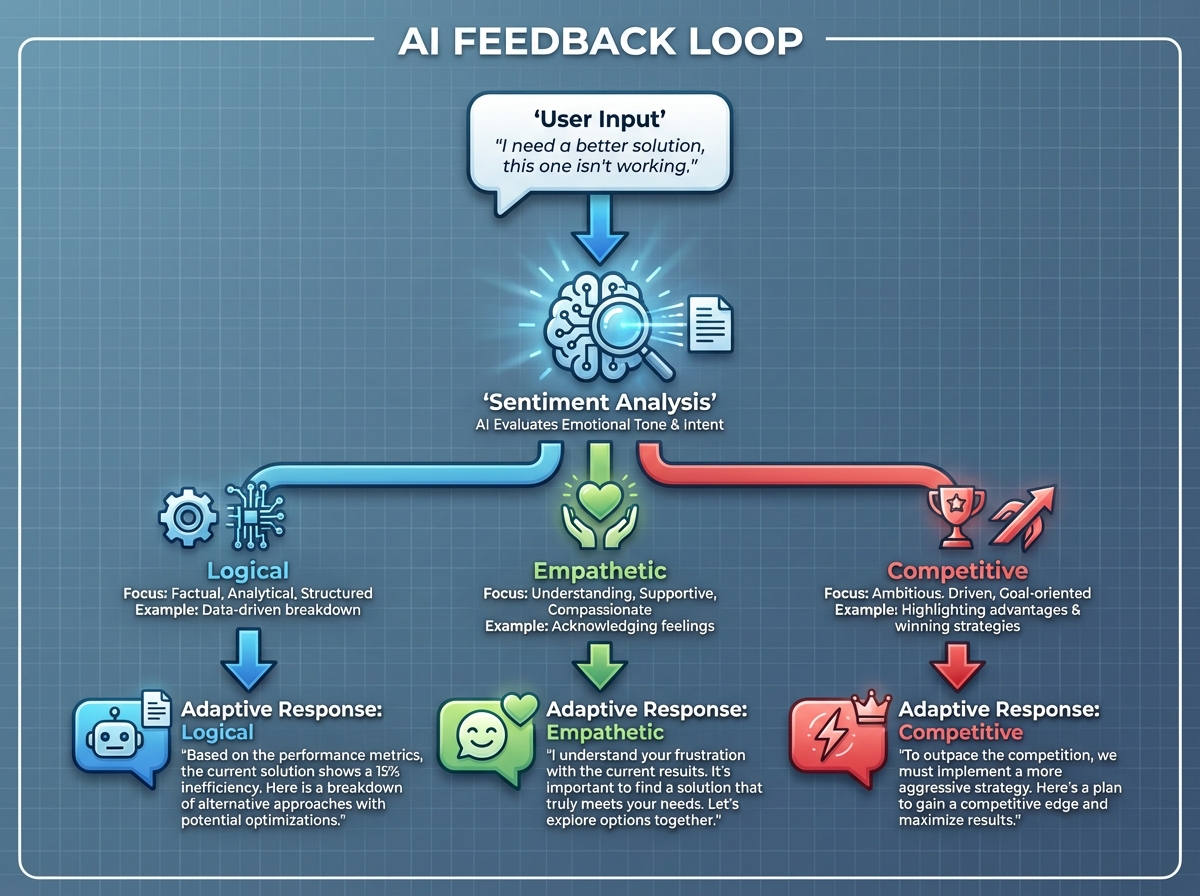
Unlike a human coach who might take weeks to understand your psyche, AI operates on immediate data analysis. Through AI Learning and sentiment analysis, sophisticated algorithms can identify your motivation style through the nuances of your text input.
If a user says, "I'm worried I won't finish this project on time and my boss will be angry," the AI detects Avoidance Motivation and high anxiety. A static tool might say, "Just make a to-do list." An adaptive AI, however, recognizes the anxiety and might respond with reassurance and a strategy to mitigate risk, catering to the user's emotional state.
Conversely, if a user says, "I want to crush this sales goal to prove I'm the best on the team," the AI detects Achievement and Power drivers. It will shift its tone to be more competitive, gamified, and metrics-focused.
Human motivation is fluid. What drives you on a Monday morning (ambition) might differ from what drives you on a Friday afternoon (exhaustion). AI excels at contextual adaptation. It remembers your stated goals but analyzes your current mood to deliver the right kind of push.
Once you have a general idea of your motivation style, you can actively guide AI tools to serve you better. Here is how to tailor your AI interactions based on your psychological profile.
If you are motivated by logic, structure, and understanding the "why," emotional pep talks will likely annoy you. You need evidence-based frameworks.
If you are motivated by connection, collaboration, and external validation, solitary work can feel draining. You need the feeling of a partnership.
You love crossing things off lists and seeing progress bars. You need challenges and visualization of progress.
Critics often argue that machines cannot possess Emotional Intelligence (EQ). While AI does not feel emotions, it can simulate high-EQ responses based on vast datasets of human interaction.
In the context of Personal Growth, this simulation is often more effective than human interaction because it is free of judgment. An AI mentor does not get frustrated if you relapse on a habit. It does not judge you for venting about procrastination. It provides a safe, neutral space for self-reflection, which is a critical component of intrinsic motivation.
This "unconditional positive regard" (a concept from humanistic psychology) allows users to be honest about their failures, leading to more accurate diagnosis of their motivational blocks and faster recovery.
Understanding motivation theory is helpful, but applying it in the heat of the moment is difficult. This is where GPTnius bridges the gap between theory and practice.
GPTnius offers AI Mentors trained on proprietary research analyzing the published works, philosophies, and proven methodologies of thought leaders, including leading researchers on motivation psychology. Our mentors do not impersonate anyone. They synthesize researched frameworks, such as mental models and structured habit systems, into personalized coaching conversations built around your specific goals.
Conversely, if you need a more empathetic approach, other AI Mentors within the platform are trained on research regarding emotional intelligence and supportive coaching models. They can synthesize these principles to help you navigate burnout or imposter syndrome.
Through features like Mentor Deep Dives and Goal Tracking, GPTnius ensures that the advice you receive isn't just generic wisdom, but a personalized strategy derived from the world's best frameworks, tailored to your specific motivational needs.
> 💡 Align Your Ambition with Your Psychology > > Don't force yourself into a motivation style that doesn't fit. Let an AI Mentor, trained on the specific frameworks that resonate with you, guide your daily growth. > > Meet the AI mentors built from this research →
The future of Personal Development is not about finding the "one secret trick" to motivation. It is about adaptability. It is about understanding that the version of you who starts a project is different from the version of you who finishes it.
By utilizing AI that understands these nuances—shifting from a cheerleader to a strategist, from a listener to a challenger—you can build a support system that is as dynamic as you are. Motivation is no longer a lightning strike you have to wait for; with the right tools, it is a renewable resource you can generate on command.
While AI doesn't 'feel' emotions, it utilizes advanced sentiment analysis and pattern recognition to identify linguistic cues associated with different motivation styles (like anxiety, excitement, or logical drive) and adapts its responses accordingly.
The primary styles include Intrinsic (internal satisfaction) vs. Extrinsic (external rewards), and Approach (moving toward a goal) vs. Avoidance (moving away from a negative outcome). People also vary based on needs for Achievement, Affiliation, or Power.
GPTnius provides AI Mentors trained on proprietary research of various thought leaders. You can choose a mentor whose 'training' aligns with your style—for example, a logic-based mentor for analytical users or an empathetic mentor for those needing support.