Master the art of Extreme Ownership in business and life. A comprehensive guide to Jocko Willink's leadership principles with actionable examples and strategies.
In the chaotic world of modern business and personal development, it is easy to point fingers. When a project fails, we blame the budget. When a team misses a deadline, we blame the lack of clarity. When we miss a personal goal, we blame our circumstances. However, the most effective leaders in the world operate on a completely different frequency. They operate with Extreme Ownership.
Popularized by former Navy SEAL officers Jocko Willink and Leif Babin in their seminal book Extreme Ownership: How U.S. Navy SEALs Lead and Win, this philosophy suggests a radical shift in perspective: There are no bad teams, only bad leaders.
This article serves as a comprehensive extreme ownership summary and practical guide. We will move beyond the theory to explore how you can apply these Jocko Willink leadership principles to navigate challenges, lead your team to victory, and take absolute control of your professional trajectory.
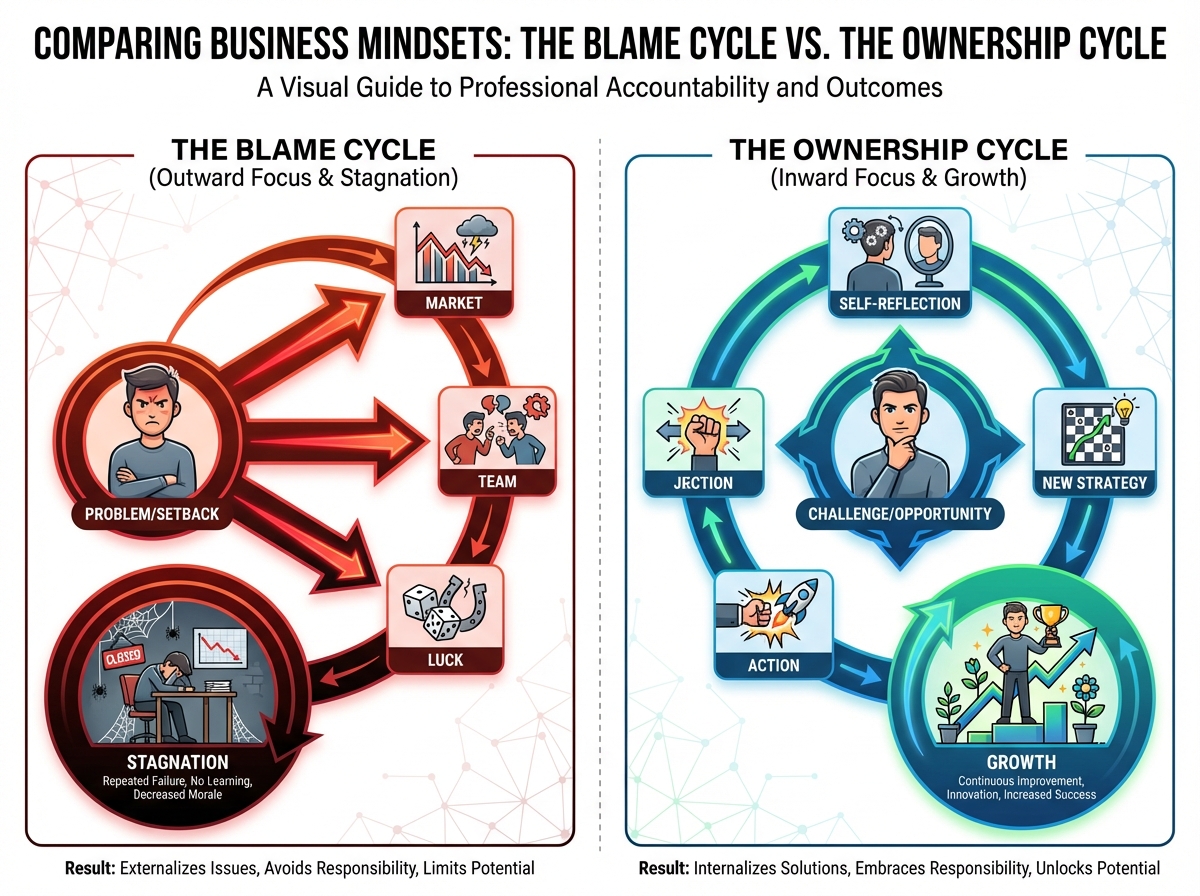
At its core, Extreme Ownership is the absolute belief that you are responsible for everything in your world. It is the end of excuses. It means that if you are a leader, you own the failure. You do not blame your subordinates for not understanding instructions; you blame yourself for not communicating clearly. You do not blame the market for a downturn; you blame yourself for not preparing a contingency plan.
This mindset is liberating. If the failure is your fault, then the solution is within your control. If the failure is someone else’s fault, you are a victim of circumstance, powerless to change the outcome. By taking ownership, you reclaim your power.
> 💡 Struggling to Identify Where You Can Take Ownership? > > It can be difficult to see our own blind spots. GPTnius AI Mentors, trained on research into leadership frameworks like Extreme Ownership, can act as a sounding board to help you analyze your recent setbacks and identify areas where you can take control. > > Meet the AI mentors built from this research →
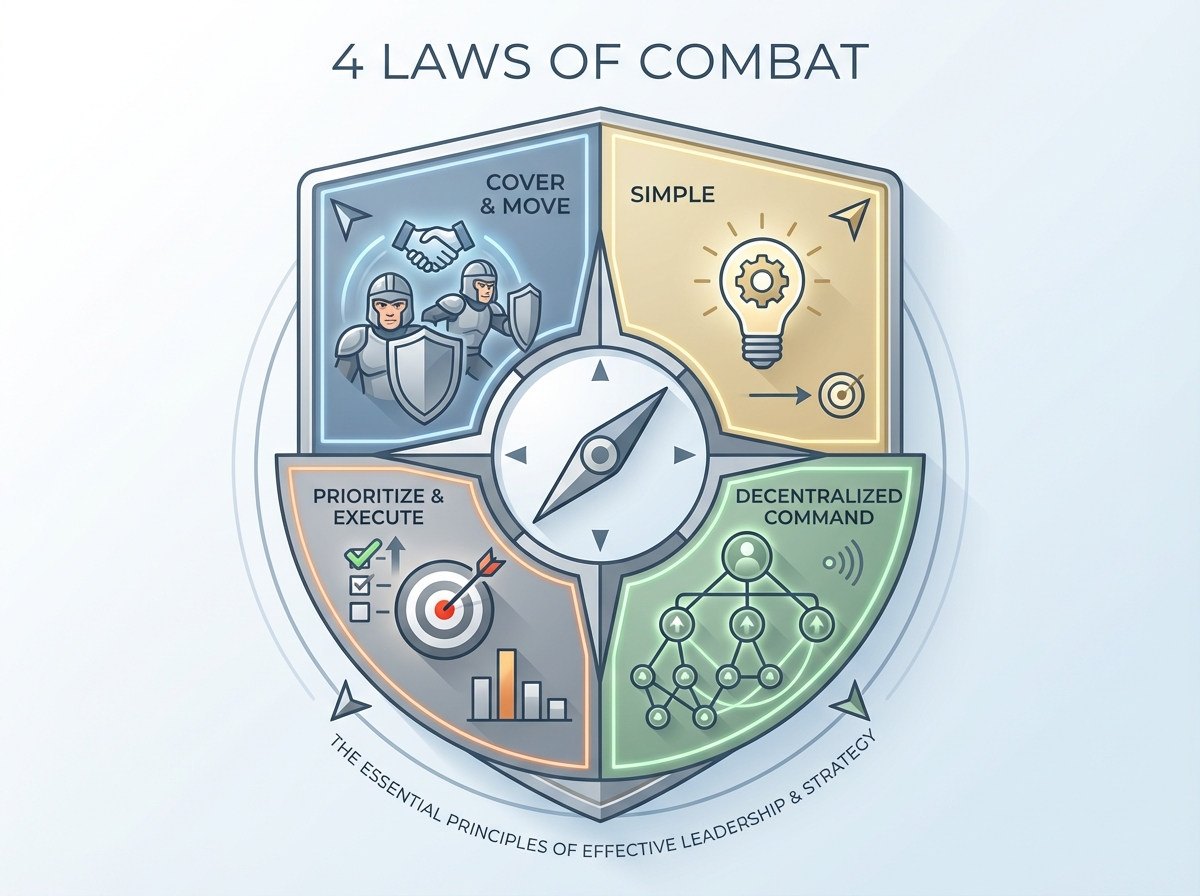
While the concept originated on the battlefield, extreme ownership in business is just as critical. Willink and Babin outline four primary "Laws of Combat" that serve as the pillars for effective leadership. Here is how to translate them into the corporate world.
In the military, "Cover and Move" means one team provides suppressing fire so the other can advance. Without it, the team fails. In business, this translates to cross-functional teamwork and breaking down silos.
The Problem: The sales team blames marketing for bad leads; marketing blames product for missing features; product blames engineering for delays. Everyone is shooting, but no one is moving.
The Fix: Leaders must ensure that every department understands how their success depends on the others. You must build relationships with other teams to ensure mutual support. If another department is failing, you don't celebrate that it's "not your problem." You help them fix it, because their failure will eventually become your failure.
Complexity is the enemy of execution. When plans are too complicated, people do not understand them. When people do not understand, they cannot execute.
The Application: Look at your current strategic plan. Is it a 40-page document filled with corporate jargon? If so, it is likely destined for failure. Your team needs to know what they are doing and why they are doing it in the simplest terms possible. If your team fails to execute, the instructions were likely too complex. Simplify them.
On the battlefield, being overwhelmed leads to inaction. The same happens in the boardroom. When leaders try to tackle ten problems at once, they solve none of them.
The Strategy:
When the pressure increases, do not speed up. Slow down, assess the landscape, pick the biggest threat, and neutralize it.
No single leader can manage every detail. Human beings generally have a span of control of about 6 to 10 people. To scale, you must empower your subordinate leaders.
The Execution: Leaders must explain the "Commander's Intent"—the ultimate goal and the "why" behind it. Once the team understands the mission, the leader must trust them to determine how to achieve it. This requires training your team to think like leaders so you can step back and focus on the strategic picture rather than micromanaging.
One of the most misunderstood extreme ownership examples is the concept of "Leading Up the Chain." Many employees believe they cannot lead because they lack the title. Extreme Ownership dictates that if your boss isn't giving you the support you need, it is your fault for not educating them properly.
This is standard leadership. It involves building trust with your team, explaining the "why," and taking the blame when things go wrong while passing the credit when things go right. It requires checking your ego at the door. If a junior employee has a better idea than you, Extreme Ownership demands you use that idea. It is not about being right; it is about the mission succeeding.
If your manager denies your request for resources, do not complain that they "don't get it." Instead, look in the mirror. Did you articulate the ROI clearly? Did you present the data effectively? Did you time the request poorly?
Leading up requires you to provide your leadership with the critical information they need to make decisions. It involves anticipating their questions and solving problems before they even reach the boss's desk.
Throughout any extreme ownership book review or analysis, one antagonist appears repeatedly: Ego. Ego clouds judgment. It prevents us from listening to constructive criticism. It forces us to prioritize our status over the success of the mission.
In a business context, Ego looks like:
To implement Extreme Ownership, you must separate your ego from your position. Admitting you were wrong does not weaken your authority; it strengthens it. It shows your team that you value the truth more than your image.
Reading about these principles is easy; living them is hard. Here is a step-by-step guide to applying these concepts immediately:
Understanding the theory of Extreme Ownership is valuable, but applying it in the heat of a stressful business environment requires practice and reflection. This is where GPTnius bridges the gap between reading and doing.
GPTnius offers AI Mentors that have been trained on proprietary research analyzing the published works, philosophies, and proven methodologies of thought leaders like Jocko Willink. While these AI Mentors are not the individuals themselves, they can synthesize the frameworks of Extreme Ownership to provide personalized coaching.
Here is how a GPTnius AI Mentor can assist you:
By engaging in guided discussions with an AI Mentor trained on these specific leadership frameworks, you can turn abstract principles into daily habits.
> 💡 Ready to Take Command of Your Career? > > Don't just read about leadership—practice it. Access AI Mentors trained on the research behind the world's most effective leadership frameworks and start applying Extreme Ownership to your life today. > > Meet the AI mentors built from this research →
Extreme Ownership is not a checklist; it is a lifestyle. It requires constant vigilance against the temptation to blame others. It demands humility and discipline. However, the rewards are immense. When you take ownership of your problems, you also take ownership of your solutions. You become a leader that people want to follow, not because they have to, but because they trust you to lead them to victory. Start today. Look in the mirror, accept the blame, and take control.
The main point is that leaders must take total responsibility for everything that impacts their mission. There are no excuses and no one else to blame. If a team fails, the leader has failed.
The four laws are: 1. Cover and Move (Teamwork), 2. Simple (Clarity in communication), 3. Prioritize and Execute (Focusing on the most critical task), and 4. Decentralized Command (Empowering subordinates).
You can apply it by 'Leading Up.' Take responsibility for your specific tasks, communicate clearly with your superiors, and instead of complaining about lack of resources, own the responsibility of persuading your boss why those resources are necessary.