Master servant leadership through Simon Sinek's Circle of Safety. Learn how prioritizing trust and well-being creates high-performing, resilient teams.
In the modern landscape of corporate management, a shifting paradigm is challenging the old guard of authority-driven leadership. The days of the distant, iron-fisted executive are waning, replaced by a demand for empathy, connection, and genuine human concern. At the forefront of this shift is the concept of servant leadership, a philosophy powerfully articulated by ethnographer and leadership expert Simon Sinek.
While Robert Greenleaf coined the term "servant leadership" in the 1970s, Sinek revitalized and expanded the concept for the 21st century in his seminal work, Leaders Eat Last. He introduced a biological and anthropological framework to explain why servant leadership works. It isn’t just about being "nice"; it is about survival, biology, and the fundamental human need for security.
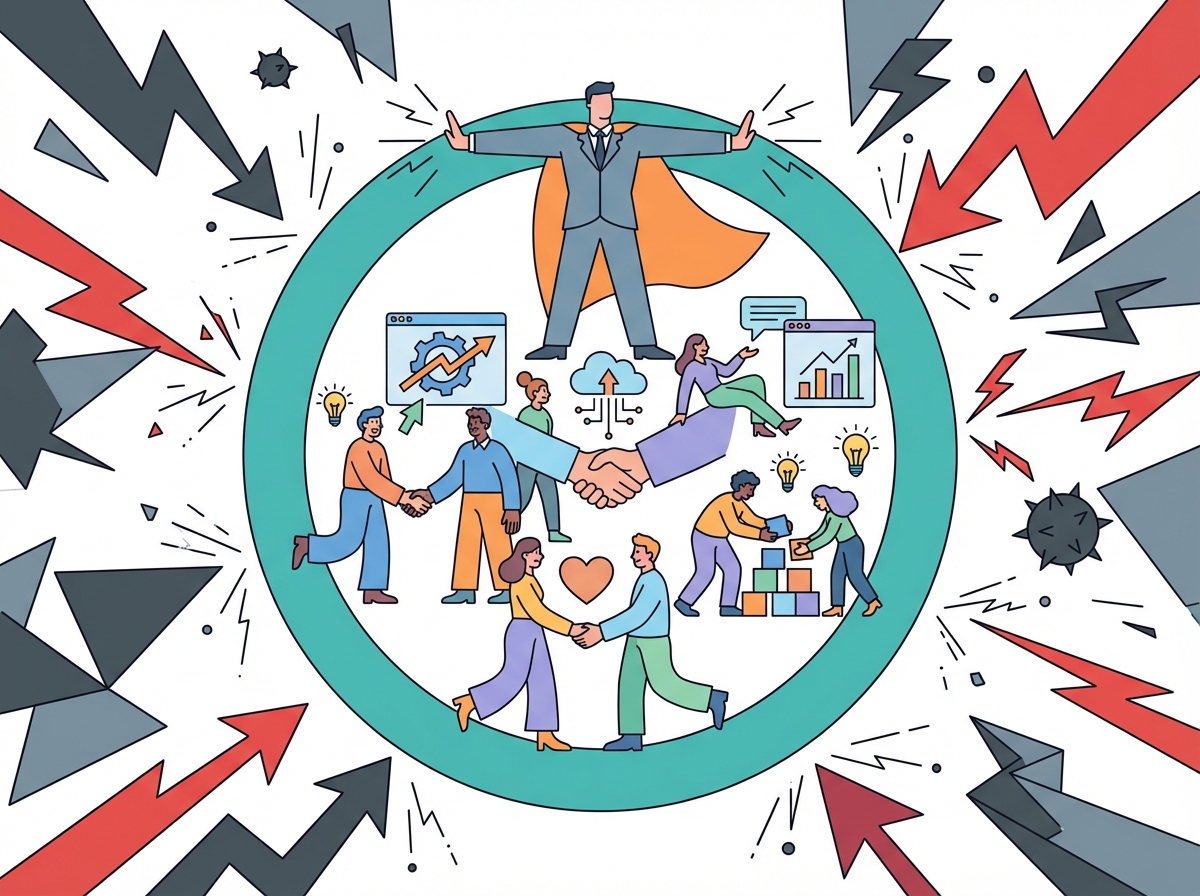
Sinek argues that great leaders sacrifice their own comfort for the good of those in their care. When they do, they create a Circle of Safety—a protective culture where employees feel secure enough to collaborate, innovate, and thrive. This article delves into the mechanics of this leadership style, exploring how you can build a Circle of Safety and why "eating last" is the ultimate recipe for organizational success.
At its simplest level, servant leadership flips the traditional pyramid hierarchy upside down. Instead of employees working to serve the leader, the leader exists to serve the employees. Sinek emphasizes that leadership is not a rank or a title to be attained; it is a choice and a responsibility.
In many organizations, leaders are conditioned to prioritize shareholders or quarterly results above all else. Servant leadership challenges this by positing that if you take care of your people, the people will take care of the business. The primary role of the leader is to remove obstacles, provide resources, and offer protection so that the team can perform at their best.
Sinek often draws a sharp distinction between those who have authority and those who are leaders:
Servant leaders understand that their status brings privileges, but those privileges come at the cost of the responsibility to protect their people. This is the essence of "Leaders Eat Last"—a metaphor drawn from the Marine Corps, where officers are the last to be served at the chow hall to ensure every junior marine has eaten. It is a symbolic gesture that reinforces the leader's duty to prioritize the team's needs above their own.
> 💡 Master the Art of Serving Your Team > > Struggling to shift from an authority mindset to a service mindset? The "Architect" AI Mentor, trained on proprietary research analyzing frameworks like Simon Sinek's, can guide you through specific scenarios to build trust. > > Meet the AI mentors built from this research →
One of the most compelling contributions Sinek has made to the conversation on servant leadership is the concept of the Circle of Safety. To understand it, we must look at our evolutionary history.
In the Paleolithic era, the world was filled with danger—predators, rival tribes, and harsh weather. To survive, humans banded together. The group provided safety. When we felt safe amongst our own, we could turn our attention outward to face external threats.
In the modern office, the "lions and bears" have been replaced by economic instability, aggressive competition, and changing technologies. These are the external dangers. A leader cannot control the economy or the competition, but they can control the environment inside the organization.
When a leader fails to create a Circle of Safety, employees face internal dangers: fear of layoffs, office politics, humiliation, or being thrown under the bus by a manager. When employees constantly fight internal battles, they have no energy left to fight external threats. They hoard information, hide mistakes, and prioritize self-preservation over the company's growth.
Sinek explains this dynamic through four primary brain chemicals:
When a leader creates a Circle of Safety, they stimulate the production of Serotonin and Oxytocin. This biological reaction literally makes the team healthier, more creative, and more loyal. Conversely, a toxic environment triggers Cortisol (the stress hormone), which inhibits Oxytocin, reduces empathy, and biologically primes the body for "fight or flight," killing collaboration.
To build this Circle of Safety, a leader must embody specific servant leadership characteristics. These are not soft skills; they are hard strategic assets.
Many leaders confuse perspective ("I understand what you are saying") with empathy ("I understand how you feel"). Servant leaders practice active empathy. They notice when team members are struggling not just with tasks, but with life. They ask, "Are you okay?" and genuinely wait for the answer.
Sinek notes that most people listen with the intent to reply, not to understand. Servant leaders practice deep listening. They create spaces where dissenting opinions are heard without fear of retribution. This openness allows the best ideas to surface, regardless of who proposes them.
A servant leader views themselves as a temporary steward of the organization's resources and people. They make decisions based on long-term sustainability rather than short-term spikes in stock price. They protect the future of the company and the careers of their people.
This goes beyond professional development budgets. It involves a personal commitment to helping employees become better human beings. Whether through mentorship, challenging assignments, or emotional support, the servant leader measures their success by the growth of their followers.
Skeptics often view servant leadership as "soft" or inefficient. However, the data and Sinek’s research suggest the opposite. The benefits of establishing a Circle of Safety are tangible and affect the bottom line.
Innovation requires risk. If an employee is terrified that a failed experiment will lead to a reprimand or firing, they will never take a risk. In a Circle of Safety, failure is viewed as a learning opportunity. This psychological safety is the bedrock of innovation.
When a team trusts their leader, they rally during hard times. Sinek cites examples like Bob Chapman of Barry-Wehmiller, who, during the 2008 recession, refused to lay off employees. Instead, the company instituted a furlough program where everyone, from the CEO down, took unpaid time off. The result? The employees felt safe and protected, morale soared, and the company bounced back faster than its competitors.
"Customers will never love a company until the employees love it first." This Sinek quote encapsulates the trickle-down effect of servant leadership. Employees who feel cared for by their leaders naturally extend that care to customers.
Implementing servant leadership principles doesn't require a title change. It requires a behavior change. Here is how you can start today:
Stop starting meetings with status updates immediately. Spend the first few minutes checking in on the people. Ask how they are doing. This small investment of time releases Oxytocin and builds the bonds necessary for the work that follows.
Be the umbrella. In large organizations, corporate bureaucracy and political mandates can rain down on your team. A servant leader filters these stressors, absorbing the pressure so the team can focus on their work. If there is a chaotic directive from above, clarify it and calm the waters before passing it down.
Most companies reward individual achievement (Dopamine). Start rewarding collaboration (Oxytocin). Publicly praise individuals who helped others succeed. Make "helping the team" a metric for promotion.
In meetings, Sinek advises leaders to be the last to speak. This prevents the team from simply aligning with the boss's opinion to stay safe. It allows you to hear the unvarnished truth and makes the team feel their input is valued.
Understanding the theory of the Circle of Safety is one thing; applying it during a high-pressure project or a conflict is another. This is where GPTnius bridges the gap between knowledge and action.
GPTnius offers AI Mentors that have been trained on proprietary research analyzing the published works, philosophies, and proven methodologies of thought leaders. For example, our "The Architect" mentor draws from research on frameworks like the Circle of Safety and servant leadership models to provide personalized coaching conversations.
Here is how GPTnius can assist your leadership journey:
GPTnius AI Mentors are not impersonating real individuals, but they are powerful tools that synthesize vast amounts of leadership research into actionable, conversational advice tailored to your specific challenges.
> 💡 Build a Culture of Trust with AI Guidance > > Ready to transform your leadership style and build a true Circle of Safety? Get personalized advice on applying these frameworks to your daily management challenges. > > Meet the AI mentors built from this research →
Simon Sinek’s vision of servant leadership is a call to return to our biological roots. We are social animals who crave safety and belonging. When leaders provide a Circle of Safety, they unlock the full potential of their workforce. It requires courage to "eat last," to place the needs of others above your own comfort, but the reward is a loyal, innovative, and resilient team that can weather any storm. By integrating these principles—and utilizing tools like GPTnius to refine your approach—you can become the leader you wish you had.
The Circle of Safety is a concept popularized by Simon Sinek which describes a work environment where the leader protects employees from internal threats (like office politics or fear of layoffs). This security allows the team to focus their energy on facing external challenges and innovating.
Key characteristics include empathy, deep listening, stewardship, foresight, and a commitment to the growth of people. Servant leaders prioritize the needs of their team above their own status or power.
Servant leadership typically leads to higher employee retention, increased innovation, better customer service, and greater organizational resilience during crises. By fostering trust, it reduces stress and improves collaboration.