Learn to look beyond immediate results with second-order thinking. Discover actionable frameworks and AI learning tools to make smarter, long-term life decisions.
In colonial India, the British government faced a problem: there were too many venomous cobras in Delhi. Their solution seemed logical and straightforward. They offered a bounty for every dead cobra. Initially, the strategy worked; the snake population dropped. But soon, enterprising locals began breeding cobras to kill them and collect the reward. When the government realized this and scrapped the program, the breeders released their worthless snakes, resulting in a wild cobra population larger than before.
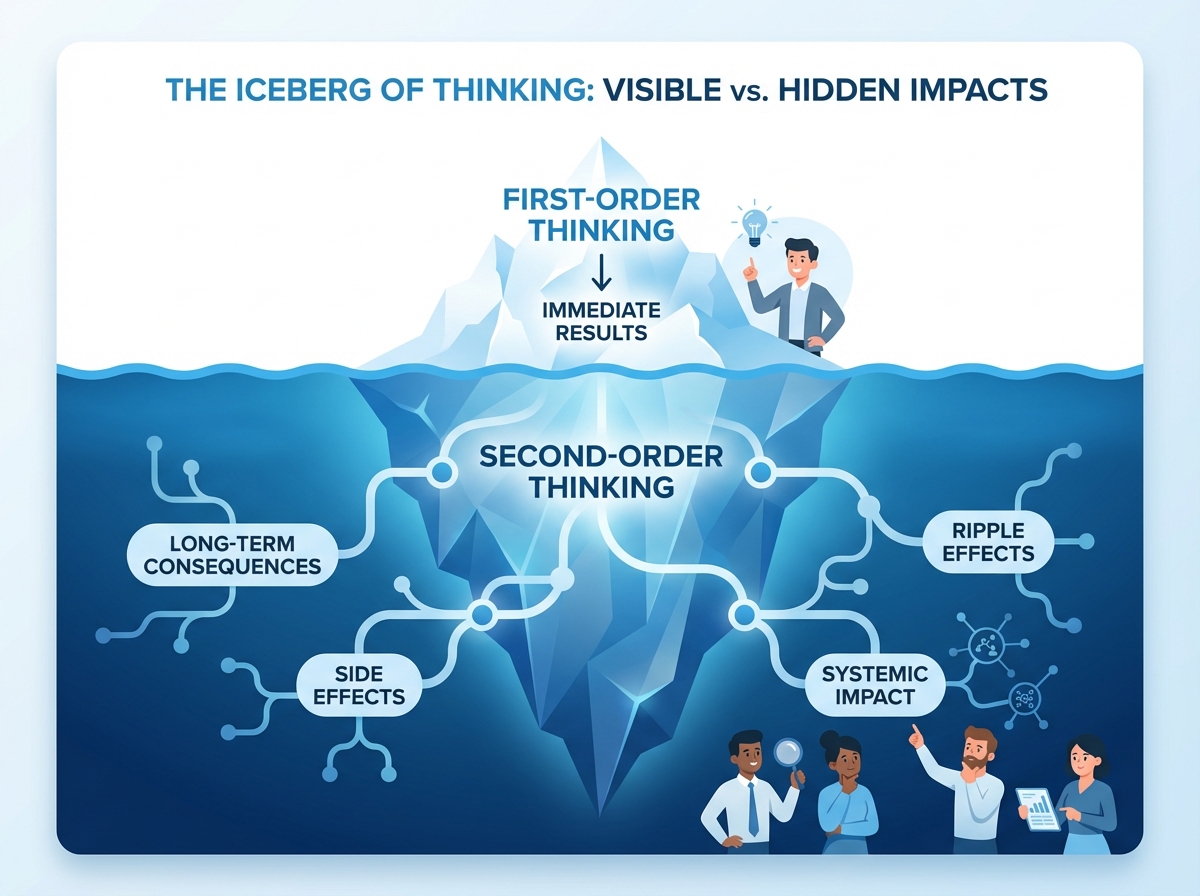
This historical anecdote, known as the "Cobra Effect," is the quintessential example of First-Order Thinking. It is the tendency to look at a problem and grab the most immediate, obvious solution without considering the subsequent chain of events.
In our modern lives, we are constantly bombarded with decisions. Should I buy this car? Should I take this job? Should I skip this workout? Most of us rely on first-order thinking because it is fast and easy. However, extraordinary results in Personal Development and business rarely come from easy thinking. They come from Second-Order Thinking—the ability to simulate the consequences of your choices before you make them.
To master decision-making, we must distinguish between these two cognitive modes.
First-order thinking is simplistic and superficial. It focuses on the immediate result. It says, "I am hungry, so I will eat a donut." It is reactionary. Everyone can do it, which is why first-order thinking rarely provides a competitive advantage.
Second-order thinking is deep, complex, and deliberate. It asks, "And then what?" It thinks in terms of interactions and time. It says, "If I eat this donut, I will get a sugar crash in an hour (second order), which will make me unproductive at work (third order), which will increase my stress tonight (fourth order)."
This mental model requires you to visualize the downstream effects of your actions. It is the hallmark of great strategists and long-term thinkers.
> 💡 Stop Reacting, Start Strategizing > > Moving from reactive choices to strategic foresight is difficult without a guide. GPTnius AI Mentors, trained on proprietary research into the mental models of world-class strategists, can help you simulate the long-term effects of your daily decisions. > > Meet the AI mentors built from this research →
Second-order thinking isn't just about being pessimistic or over-analyzing; it is about probability and preparation. How do we practically apply this to Mental Models & Decision Making?
The simplest way to trigger second-order thinking is to relentlessly ask, "And then what?" through at least three layers of consequences.
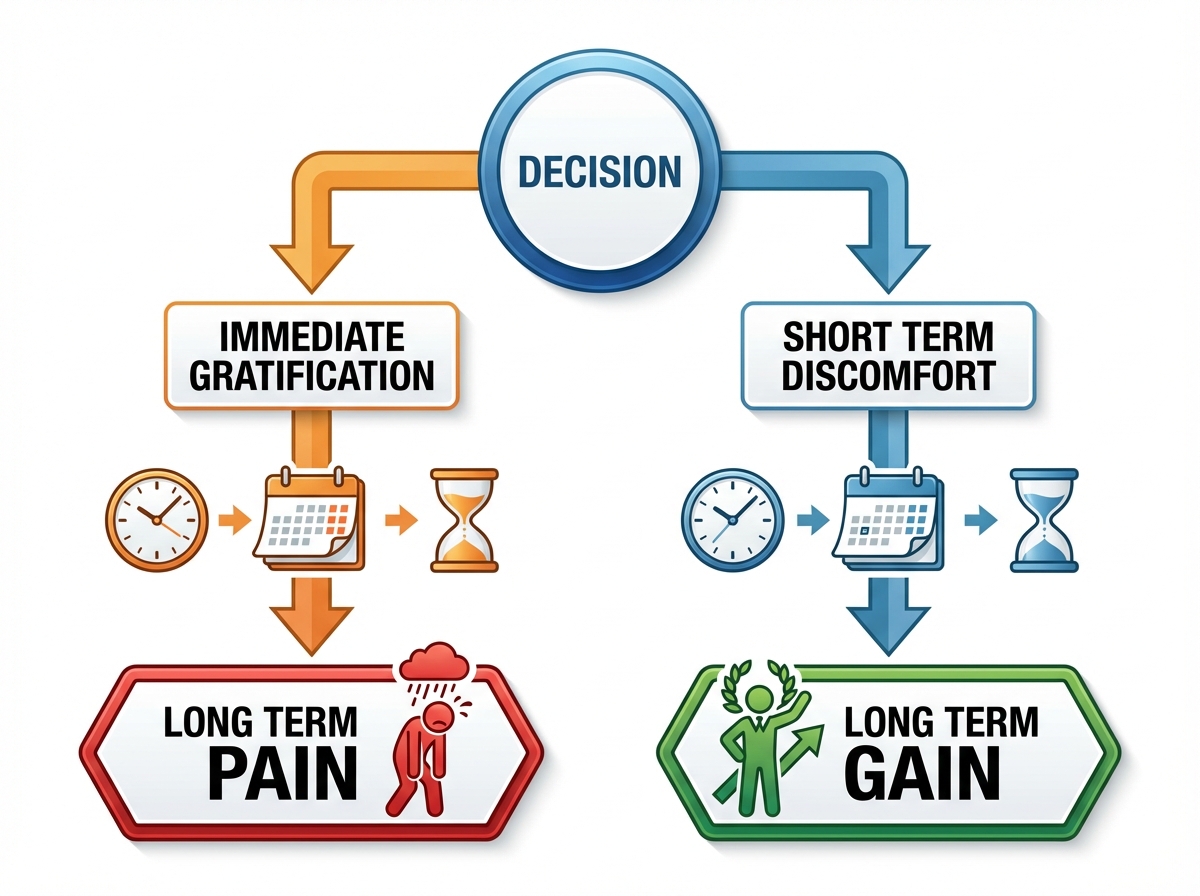
Popularized by business writers, this framework forces a temporal perspective shift. Before making a difficult decision, ask yourself:
This rule is particularly effective for emotional decisions where the present moment feels overwhelming. It helps the rational brain override the emotional brain's desire for immediate gratification.
Instead of asking how a decision will succeed, ask how it could fail. If you are launching a new project, imagine it is one year later and the project has been a total disaster. Write down the history of that disaster. What went wrong?
By simulating the failure paths (second and third-order negative consequences), you can build safeguards against them today. This is a core component of robust AI Learning and strategic planning.
First-order thinking says: "Take the job with the highest salary." Second-order thinking asks: "What does the high salary cost me?" If the job requires 80-hour weeks (Second Order), your health and relationships may deteriorate (Third Order), leading to burnout and a forced career break (Fourth Order). A lower-paying job with mentorship opportunities might lead to higher skills and vastly higher earnings in five years.
First-order thinking focuses on the scale. "I want to lose weight, so I will starve myself." Second-order thinking recognizes that drastic calorie restriction slows metabolism and increases ghrelin (hunger hormone) production. The second-order consequence is a binge-eating episode and regaining the weight. A sustainable, slower approach yields the desired long-term result.
First-order thinking is buying a luxury car on credit to look successful. Second-order thinking calculates the opportunity cost of that capital. Investing that money in an index fund or self-education creates a compounding asset, whereas the car is a depreciating liability that restricts future freedom.
A common critique of second-order thinking is that it can lead to overthinking, where you become so paralyzed by potential future scenarios that you never act. This is where the concept of Asymmetric Risk becomes vital.
If the downside of a decision is capped (you can only lose a little) but the upside is unlimited (you could gain a lot), you don't need perfect second-order clarity. You just need to act. Conversely, if the immediate gain is small but the second-order risk is "ruin" (total loss of reputation, health, or savings), you must pause.
Effective decision-making is about identifying which decisions require deep simulation and which require speed.
Understanding second-order thinking is easy; applying it consistently when you are tired, stressed, or emotional is incredibly difficult. This is where GPTnius bridges the gap between theory and practice.
GPTnius offers AI Mentors trained on proprietary research analyzing the published works, philosophies, and proven methodologies of thought leaders, including thinkers like Charlie Munger. Our mentors do not impersonate anyone. They synthesize researched frameworks, such as second-order thinking and mental models, into personalized coaching conversations built around your specific goals.
Here is how these AI Mentors assist in consequence simulation:
By outsourcing a portion of your cognitive load to a mentor trained on the best strategic minds in history, you elevate your decision-making from reactive to visionary.
> 💡 Master Your Mental Models > > Don't leave your life choices to chance or impulse. Engage with an AI Mentor trained on the research behind the world's best decision-making frameworks to navigate complex choices with clarity. > > Meet the AI mentors built from this research →
First-order thinking focuses on immediate results and instant gratification (e.g., eating sugar for energy). Second-order thinking looks at the subsequent effects of that action over time (e.g., the sugar crash and long-term health impact).
Use the 'And then what?' technique. Whenever you make a decision, ask 'And then what?' three times to uncover the chain of consequences. You can also use the 10-10-10 rule (10 minutes, 10 months, 10 years).
Yes. AI tools like GPTnius offer mentors trained on proprietary research into mental models. These mentors can act as a sounding board, helping you simulate consequences and identify blind spots in your decision-making process.