Unlock peak performance by understanding the neuroscience of flow states. Learn how neurochemistry and AI learning tools can trigger deep work on demand.
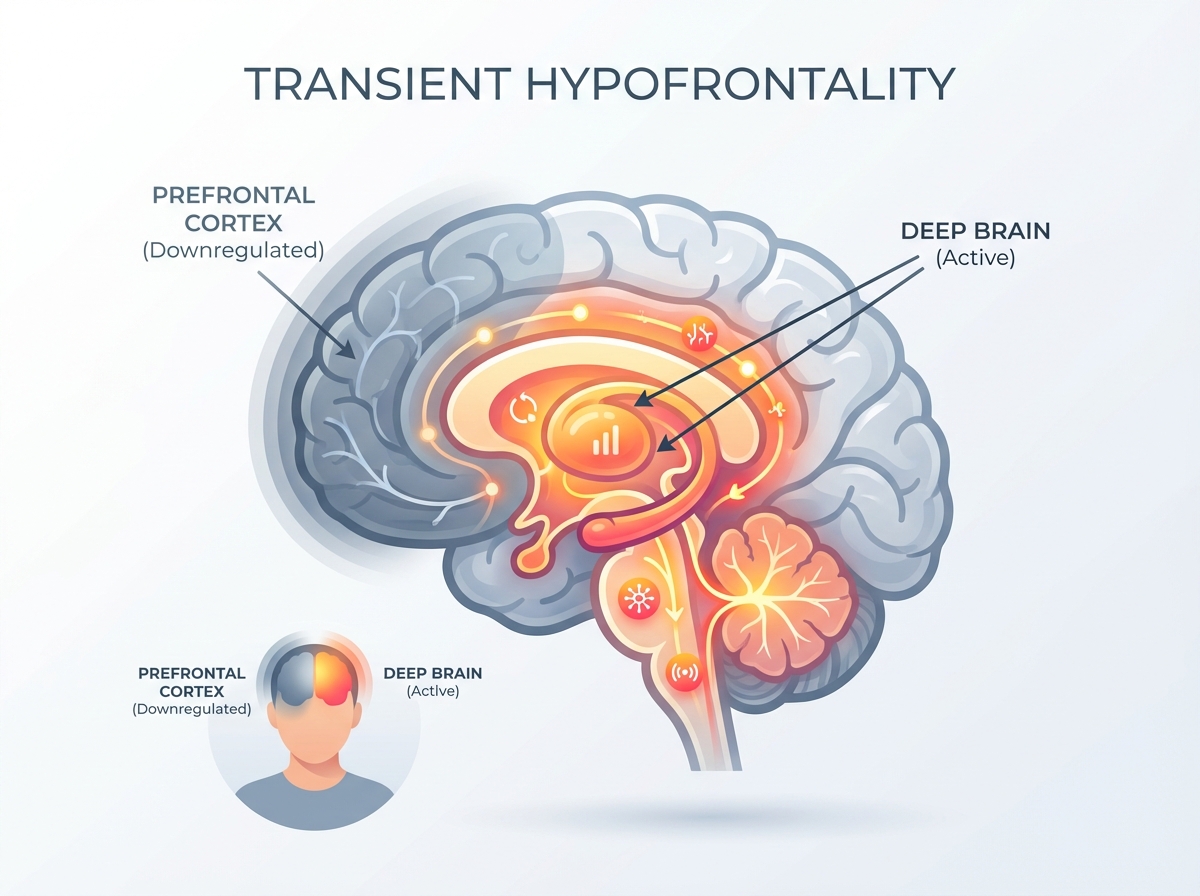
Flow is not just a feeling; it is a measurable neurological state characterized by "transient hypofrontality" (a quieting of the prefrontal cortex) and a potent cocktail of performance-enhancing neurochemicals. By understanding the mechanics of the challenge-skill balance and leveraging structured feedback—such as that provided by AI Mentors—you can bypass distraction and trigger deep work on demand.
---
Have you ever been so immersed in a task that the world around you seemed to dissolve? Time dilated, hunger vanished, and your output wasn't just faster—it was better. This is the state of Flow, often described by athletes as being "in the zone."
For decades, flow was considered an elusive, mystical experience. However, modern imaging and neurochemistry have demystified this phenomenon. We now understand the neuroscience of flow states well enough to reverse-engineer them. It is no longer about waiting for inspiration to strike; it is about constructing the cognitive environment where inspiration becomes inevitable.
In an era defined by digital distraction, the ability to trigger deep work on demand is the ultimate competitive advantage. This guide explores the biological mechanics of flow, its relationship with neuroplasticity and brain health, and how you can utilize frameworks—including AI learning technologies—to master your attention.
To control flow, you must first understand what is happening inside the skull during these periods of intense focus. Contrary to popular belief, flow is not a state of hyper-activity in the brain; it is actually a state of specific deactivation.
The defining neurological signature of flow is a phenomenon known as Transient Hypofrontality.
The prefrontal cortex is the seat of your conscious personality. It handles complex planning, temporal processing (your sense of time), and, crucially, your inner critic. When you enter a flow state, the PFC downregulates. This explains why your sense of self disappears and why time seems to warp. With the inner critic silenced, you are no longer second-guessing your decisions; you are simply acting.
While the PFC quiets down, the brain releases a cascade of five potent neurochemicals that amplify performance and learning. This is often referred to as the "STER" cocktail:
This chemical combination not only feels good—it dramatically accelerates Neuroplasticity & Brain Health. Dopamine and acetylcholine prime the nervous system to encode new information, meaning you learn significantly faster in flow than in a normal resting state.
> 💡 Structure Your Environment for Peak Performance > > Understanding the neurochemistry of flow is the first step; applying it requires a structured approach to your daily work. GPTnius AI Mentors, trained on proprietary research into habit formation and mental models, can help you design the rituals necessary to trigger this chemical cascade. > > Meet the AI mentors built from this research →
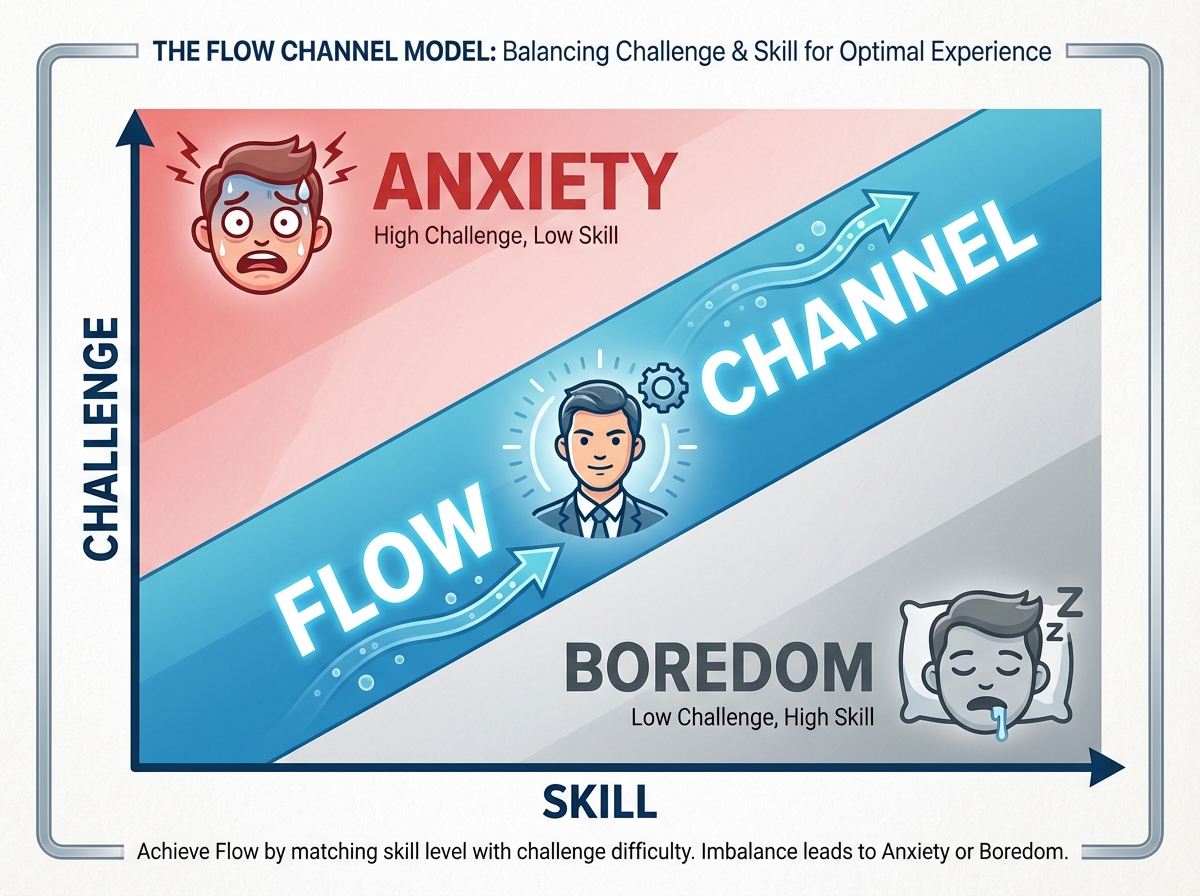
While neuroscience explains the hardware, psychology explains the software. The most critical psychological trigger for flow is the Challenge-Skill Balance.
Imagine a graph. On the Y-axis, you have the difficulty of the challenge. On the X-axis, you have your skill level.
Two other psychological pillars support the flow state:
You cannot force flow, but you can create the conditions where it is statistically likely to occur. Here are three actionable triggers based on Personal Development research.
Because flow requires the suppression of the prefrontal cortex, any external distraction that re-engages the PFC will snap you out of the state. It takes approximately 23 minutes to refocus after an interruption.
Pavlovian conditioning works on humans, too. By establishing a pre-work ritual, you signal to your brain that it is time to shift neurochemistry.
The brain pays attention when there is something at stake. This doesn't mean physical danger; it can be social or professional risk.
One of the most exciting developments in AI Learning is the ability of artificial intelligence to act as a flow catalyst. As mentioned, immediate feedback is a prerequisite for flow. In solitary knowledge work (coding, writing, strategizing), feedback is usually delayed.
AI changes this dynamic. An AI mentor or tool can provide real-time feedback on your output, effectively gamifying the work process. It creates a tight feedback loop that keeps the brain engaged in the Challenge-Skill sweet spot.
Furthermore, AI can handle the "cognitive drudgery"—the low-skill tasks that cause boredom—allowing you to focus entirely on the high-skill, high-challenge aspects of your work. This symbiotic relationship between human cognition and AI processing power is the frontier of modern productivity.
Understanding the theory of flow is powerful, but applying it consistently requires personalized guidance and accountability. This is where GPTnius bridges the gap.
GPTnius offers AI Mentors trained on proprietary research analyzing the published works, philosophies, and proven methodologies of thought leaders, including leading researchers on flow and peak performance. Our mentors do not impersonate anyone. They synthesize researched frameworks, such as the challenge-skill balance and deep work rituals, into personalized coaching conversations built around your specific goals.
Here is how these AI Mentors help you achieve flow:
By turning abstract principles into a personalized coaching conversation, GPTnius helps you build the specific neural pathways required for deep work.
> 💡 Unlock Your Potential with AI Mentorship > > Stop struggling with distraction and start building the habits that make high performance automatic. Let a GPTnius AI Mentor, trained on the world's best strategies, guide you into your zone of genius. > > Meet the AI mentors built from this research →
The neuroscience of flow states reveals that peak performance is not an accident—it is a biological process that can be engineered. By respecting the limits of your prefrontal cortex, optimizing your neurochemistry through environment and ritual, and utilizing tools like AI to tighten feedback loops, you can reclaim your attention.
Deep work is rare, and therefore, it is valuable. Mastering the ability to toggle into this state is the key to thriving in a complex economy. The brain is plastic; it will mold itself to the habits you practice. Make flow your habit.
Transient hypofrontality is the temporary downregulation (quieting) of the prefrontal cortex during flow. This reduces self-consciousness and the 'inner critic,' allowing for effortless action and a distorted sense of time.
While it varies by individual and task, research suggests it typically takes 15 to 20 minutes of undivided attention to enter a flow state. Interruptions can reset this clock entirely.
Yes. AI tools can provide immediate feedback and structure challenges to match your skill level, creating the psychological conditions necessary for flow. They can also remove repetitive tasks that cause boredom.