Master peak performance with Tony Robbins' strategies. Learn NLP techniques, the Success Triad, and how to shatter limiting beliefs for personal transformation.
Why do some people seem to have an endless reservoir of energy and drive, while others struggle to get out of bed? Why do certain individuals bounce back from failure immediately, while others are paralyzed by it? The difference rarely lies in capability or talent. The difference lies in psychology.
For decades, the study of peak performance has centered on a fundamental truth: success is 80% psychology and 20% mechanics. If you have the right strategy but the wrong mindset, you will inevitably fail. Conversely, if you have an unstoppable mindset, you will eventually find the right strategy.
This article explores the core frameworks of personal transformation often associated with thought leaders like Tony Robbins. By dissecting concepts such as the "State Triad," limiting beliefs, and Neuro-Linguistic Programming (NLP), we will provide you with a roadmap to unleash the power within and achieve lasting breakthrough results.
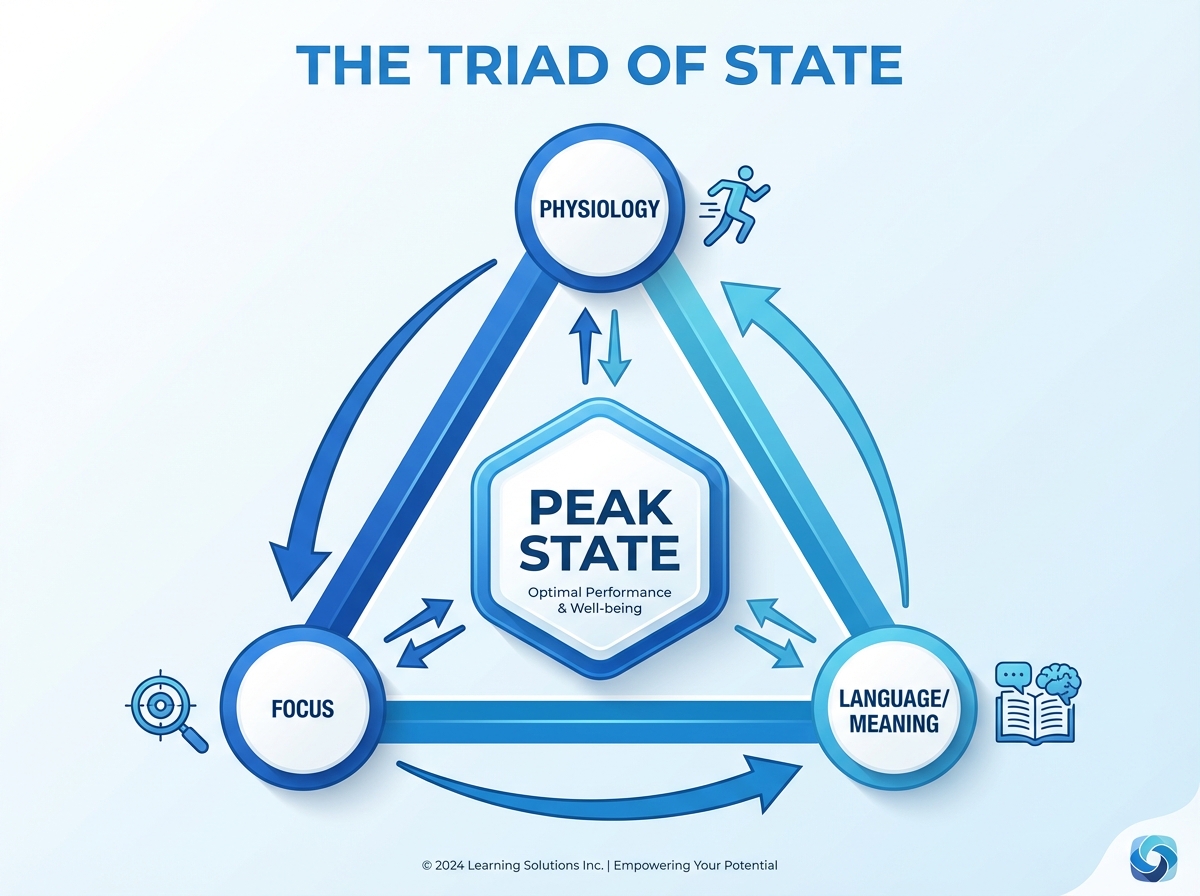
The most immediate way to change how you feel—and consequently, how you perform—is to change your "state." A peak state produces peak results; a poor state produces poor results. The framework for managing this is often referred to as the Triad of State, which consists of three interconnected forces.
Your body leads, and your emotions follow. It is biologically impossible to remain depressed if you are standing tall, breathing deeply, looking up, and smiling. Conversely, it is difficult to feel empowered if you are slumped over, taking shallow breaths, and looking at the floor.
Actionable Insight: To instantly shift your state, change your physiology radically. If you feel lethargic, do ten jumping jacks. If you feel anxious, practice "box breathing" (inhale for 4 seconds, hold for 4, exhale for 4, hold for 4). By consciously adopting the posture of a confident person, your brain begins to produce the neurochemistry of confidence.
Whatever you focus on, you feel. If you focus on what is missing in your life, you will feel unfulfilled. If you focus on what you are grateful for, you will feel abundant. Many people habitually focus on things they cannot control, leading to chronic stress.
Actionable Insight: Audit your focus. Are you focused on the problem or the solution? Are you focused on the past or the future? Shift your focus by asking better questions. Instead of asking, "Why does this always happen to me?" ask, "What can I learn from this?" or "How can I use this to my advantage?"
The words you use to describe your experience become your experience. If you describe a situation as "devastating," your body reacts differently than if you describe it as a "challenge." This applies to internal self-talk as well.
Transformational Vocabulary:
> 💡 Master Your State for Peak Performance > > Struggling to maintain a peak state during high-pressure moments? GPTnius AI Mentors, trained on research into high-performance psychology and physiological frameworks, can help you build a personalized routine to reset your focus and energy instantly. > > Meet the AI mentors built from this research →
If the Triad of State is the engine, your beliefs are the steering wheel. You can have all the energy in the world, but if your beliefs are steering you toward a cliff, you will crash. Limiting beliefs are the stories we tell ourselves about who we are and what is possible.
Most people are not kept from their goals by a lack of ability, but by the story they tell themselves about why they can't achieve them. Common stories include:
These stories are defense mechanisms designed to protect us from the pain of failure, but they also prevent the pleasure of success.
Imagine a belief is like a tabletop. To be stable, it needs legs (references or proof) to support it. If you believe "I am not good at public speaking," you have references supporting that table (e.g., a bad presentation in high school, a rude comment from a boss).
To shatter the belief, you must knock out the legs:
Many peak performance strategies are rooted in Neuro-Linguistic Programming (NLP). NLP is the study of how our neurological system (neuro), language (linguistic), and behavioral patterns (programming) interact to create our reality.
Anchoring is a technique where you associate a specific physical touch or gesture with a peak emotional state. Just as a specific song might instantly make you feel nostalgic, you can create a trigger for confidence.
How to Create an Anchor:
Nothing in life has meaning except the meaning we give it. Reframing is the art of changing the context or content of a situation to change its meaning.
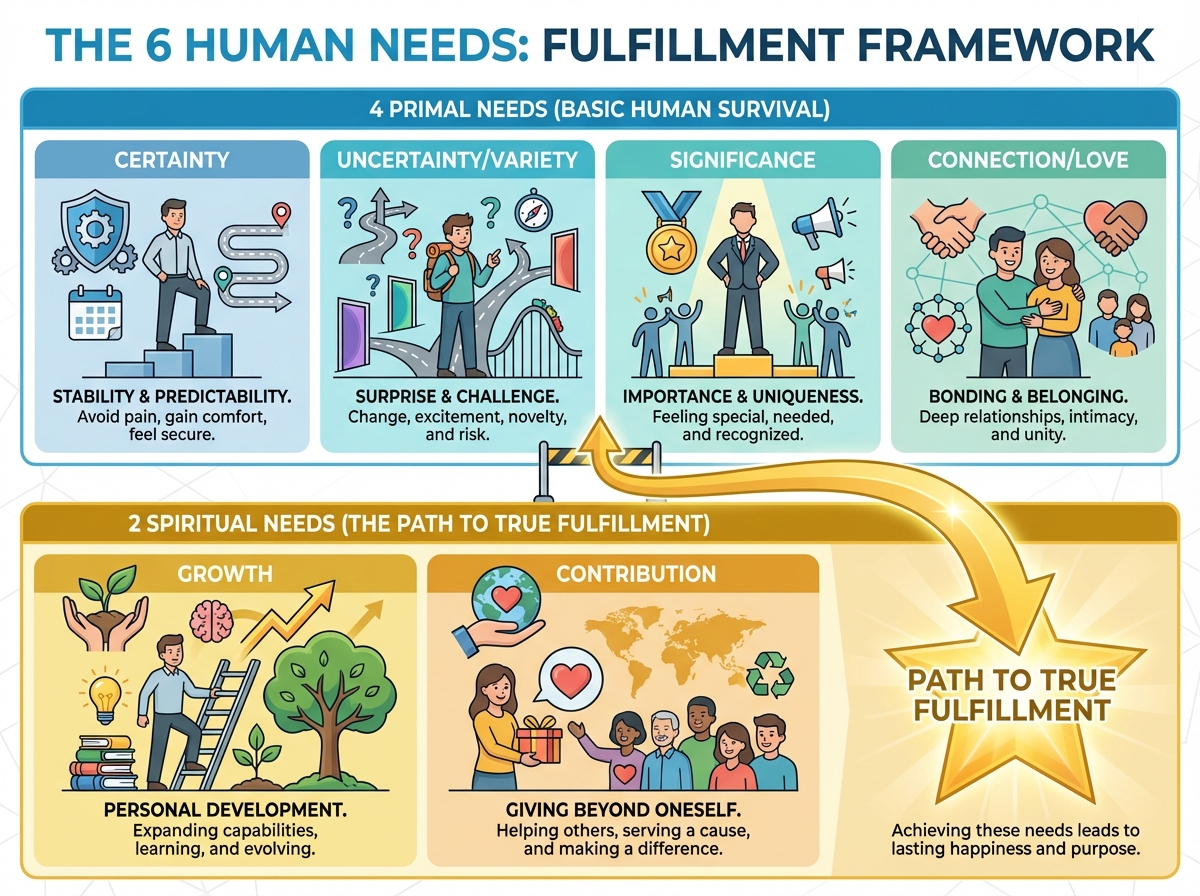
To create lasting personal transformation, you must understand the invisible forces driving your behavior. Research into human motivation suggests there are six fundamental needs that everyone strives to meet. The way you prioritize these needs determines the direction of your life.
The Trap of Significance: Many high achievers prioritize Significance above all else. While this drives success, it often leads to isolation and burnout. True fulfillment usually comes from prioritizing Growth and Contribution, while finding healthy ways to meet the need for Significance.
Once you have mastered your state and aligned your beliefs, you need a framework for execution. This is often distilled into a four-step process for achieving any goal.
Reading about peak performance strategies is inspiring, but applying them consistently is where transformation happens. This is where GPTnius bridges the gap between theory and practice.
GPTnius offers AI Mentors that have been trained on proprietary research analyzing the published works, philosophies, and proven methodologies of thought leaders in personal development and psychology.
For example, you can engage with a mentor designed to simulate the strategic thinking found in breakthrough coaching models. Here is how GPTnius helps you apply these frameworks:
By synthesizing these researched frameworks into personalized coaching conversations, GPTnius allows you to practice these principles daily, turning intellectual knowledge into embodied wisdom.
> 💡 Break Through Your Limitations Today > > ready to apply the Ultimate Success Formula to your life? Engage with GPTnius AI Mentors trained on the world's most effective peak performance research to shatter limiting beliefs and achieve your goals. > > Meet the AI mentors built from this research →
Unleashing the power within is not a one-time event; it is a lifestyle. It requires a commitment to constant and never-ending improvement. By mastering the Triad of State, rewriting your internal story, and understanding the needs that drive you, you can take control of your destiny.
The strategies of peak performance—from NLP anchoring to the 6 Human Needs—are tools waiting to be used. The only variable remaining is your decision to use them. As the philosophy goes: It is in your moments of decision that your destiny is shaped. Decide today to commit to your own transformation.
The Triad of State consists of Physiology (how you use your body), Focus (what you pay attention to), and Language (how you talk to yourself). Changing any one of these three elements can instantly shift your emotional state and performance level.
To break limiting beliefs, you must first identify the 'story' you tell yourself about why you can't succeed. Then, undermine the 'legs' of that belief by questioning the validity of the references supporting it and creating new experiences that prove the opposite.
The 6 Human Needs are Certainty, Uncertainty/Variety, Significance, Connection/Love, Growth, and Contribution. Understanding which needs you prioritize helps explain your behavior and allows you to shift toward more fulfilling motivations like Growth and Contribution.